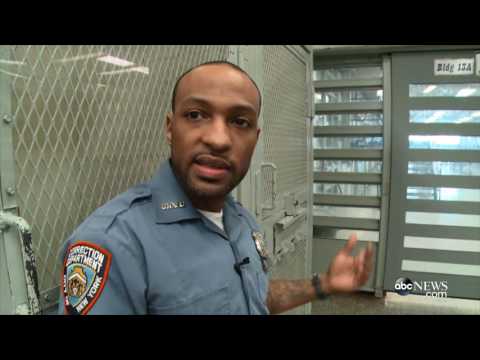
Photo: Adam.J.W.C. (CC BY-SA 2.5)
Job description
A shift includes head counts to confirm every inmate is accounted for, regular checks of locks, bars, and gates for signs of tampering, and monitoring inmate behavior during work, meals, and recreation. Officers also search prisoners and cells for contraband, screen visitors at the entrance, and keep detailed logs of incidents and inmate activity. It's high-vigilance, team-based work where accuracy matters, a missed detail can be a safety issue, and projected job openings are actually declining, down nearly 8%, even as the role remains demanding.
Pros
- Accessible entry point, just a high school diploma with on-the-job training required
- Solid pay ceiling (up to $93k) for a role with no college degree required
- Over 30,100 positions nationwide, broad availability across facilities
Cons
- Employment in this field is projected to shrink over the next decade (-7.8%)
- Fast pace with real time pressure, requiring constant vigilance to prevent escape or violence
- Regularly dealing with confrontational or upset individuals in a high-security, high-stress environment
A typical day
Roll call at 5:45am covers the overnight report: which units were quiet, which inmate is on watch status, what contraband turned up in yesterday's search. The shift is structured vigilance — head counts at set intervals that must reconcile exactly, escorting inmates to medical and visitation, supervising the chow hall where most trouble starts, and walking the tier with eyes and ears open because officers who notice small changes prevent large incidents. A cell search mid-shift turns up a sharpened toothbrush; the paperwork takes longer than the search. The job runs on consistency and de-escalation — the officer who treats everyone the same, follows procedure, and talks situations down goes home safe and gets respected on both sides of the bars.
Tasks at the job
- Conduct head counts to ensure that each prisoner is present.
- Inspect conditions of locks, window bars, grills, doors, and gates at correctional facilities to ensure security and help prevent escapes.
- Monitor conduct of prisoners in housing unit, or during work or recreational activities, according to established policies, regulations, and procedures, to prevent escape or violence.
- Search prisoners and vehicles and conduct shakedowns of cells for valuables and contraband, such as weapons or drugs.
- Guard facility entrances to screen visitors.
- Record information, such as prisoner identification, charges, and incidents of inmate disturbance, keeping daily logs of prisoner activities.
Workplace & working conditions
Work happens indoors in a climate-controlled setting, and you work in close physical proximity to coworkers or the public for much of the shift. Noise levels can be distracting or uncomfortable. The role involves regular exposure to contaminants, and standard protective equipment (gloves, safety glasses, and similar) is expected.
The pace is often fast, with real time pressure to meet deadlines, and you're expected to exercise significant independent judgment day to day. Precision and accuracy are essential to the work. You'll regularly deal with frustrated or upset people as part of the job, and almost all of the work is done as part of a team.
Education necessary or common
High school diploma; some on-the-job training or apprenticeship
Licenses & certifications
- State corrections academy certification
- First Aid/CPR
- Defensive tactics and firearms certifications (agency-provided)
Career path
Related fields
Courses to take
- AP Psychology — human behavior under stress is the daily terrain
- Criminal Justice electives if your school offers them
- PE/Weight Training — fitness standards are real and the job is physical
- English — incident reports must hold up to review
- Sociology — understanding institutions and populations
Clubs, activities & competitions
- Law enforcement Explorer post
- JROTC — structure and discipline transfer directly
- Team sports — composure under pressure
- Peer mediation — de-escalation is the core job skill
First steps you can take now
- Look up your state's corrections academy requirements — many hire at 18-21
- Ride along or tour options: some sheriff's departments offer them
- Build a fitness routine to academy standards now
- Talk to a corrections officer about what the job is actually like