Photo: Prestigiousauto (CC BY-SA 4.0)
Job description
The job starts with assessing collision damage, then using hydraulic alignment machines, chains, and clamps to pull a bent frame back into shape and welding or fitting new panels where needed. After grinding and sanding filled or repaired surfaces smooth, repairers prime and paint with sprayguns and motorized sanders to match the original finish, then test-drive the vehicle to confirm the handling and alignment are right before calling the job done. Most of the work happens standing on a shop floor, and time pressure to hit deadlines set by supervisors is a constant.
Pros
- Sizable job market with 14,600 positions nationwide, more than many specialty trades
- Pay ceiling near $88k achievable with just a high school diploma and apprenticeship
- Tangible, hands-on craft work restoring a damaged vehicle to like-new condition and appearance
Cons
- Slower than average projected job growth
- Above-average hours, often exceeding a standard 40-hour work week
- Regular exposure to hazardous equipment, paint fumes, and other contaminants on the shop floor
A typical day
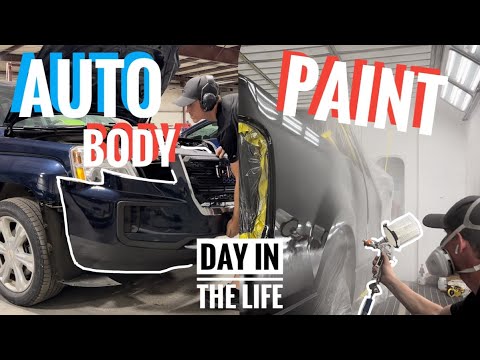
The morning starts with a teardown: a rear-ended sedan goes on the frame bench, and measuring arms confirm what the eye suspected — structural pull needed before any panel work begins. The repairer sets up chains and anchors, then brings the unibody back to factory dimensions millimeter by millimeter against the spec sheet. Midday moves to metal finishing: hammer-and-dolly work on a door skin, then filler applied thin and blocked flat by feel, fingertips reading waves a light can't show yet. Afternoon holds a quarter-panel replacement — spot welds drilled, new panel fitted and welded per OEM procedure, seam-sealed, and primed. Calibrating a bumper's radar sensor closes the day; modern collision work is bodywork plus electronics.
Tasks at the job
- File, grind, sand, and smooth filled or repaired surfaces, using power tools and hand tools.
- Inspect repaired vehicles for proper functioning, completion of work, dimensional accuracy, and overall appearance of paint job, and test-drive vehicles to ensure proper alignment and handling.
- Fit and weld replacement parts into place, using wrenches and welding equipment, and grind down welds to smooth them, using power grinders and other tools.
- Prime and paint repaired surfaces, using paint sprayguns and motorized sanders.
- Follow supervisors' instructions as to which parts to restore or replace and how much time the job should take.
- Chain or clamp frames and sections to alignment machines that use hydraulic pressure to align damaged components.
Workplace & working conditions
Work happens indoors, though not always in a climate-controlled space, and most of the day is spent on your feet. Noise levels can be distracting or uncomfortable. The role involves regular exposure to hazardous equipment or conditions and contaminants, and specialized protective equipment is standard.
The pace is often fast, with real time pressure to meet deadlines, and you're expected to exercise significant independent judgment day to day. Precision and accuracy are essential to the work.
Education necessary or common
High school diploma; some on-the-job training or apprenticeship
Licenses & certifications
- I-CAR Platinum (the collision industry standard)
- ASE B-series collision certifications
- EPA 609 (A/C handling, useful)
- Welding certifications (structural sectioning)
Career path
Related fields
Courses to take
- Auto Body / Collision Repair courses if your school or career center offers them
- Auto Shop
- Welding
- Chemistry — coatings, adhesives, and corrosion
- Geometry — structural measurement
Clubs, activities & competitions
- SkillsUSA — collision repair and refinishing are national contest categories
- Restore or repair a project vehicle or bike
- Car club
- Part-time work at a body shop, detail shop, or parts store
First steps you can take now
- Enroll in your area career-technical center's collision program if eligible — it's the standard fast track
- Practice body filler and sanding technique on a scrap panel from a junkyard
- Visit a collision shop and ask the manager what they look for in an apprentice
- Take the free I-CAR introductory materials online to learn the industry's vocabulary