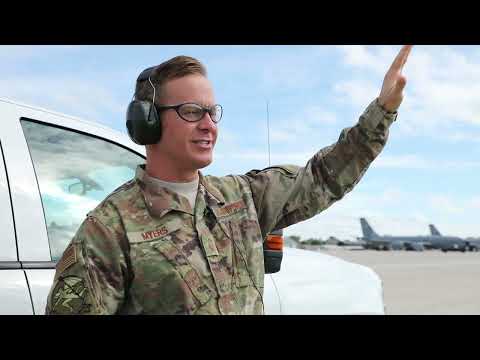
Photo: U.S. Air Force photo by Staff Sgt. Nathan Wingate (Public domain)
Job description
A shift might include walking or driving the perimeter fence to check for breaches, inspecting runway surfaces and lighting against federal standards, and dispatching updates between air traffic control and maintenance crews. When something goes wrong, whether an aircraft emergency or a medical call on the ramp, specialists are often first to respond and help coordinate the scene. The job runs on strict procedures because mistakes near active runways carry real safety stakes, and experienced specialists often move into training newer operations staff. Most of the shift happens inside a vehicle or piece of equipment, amid noise and occasional exposure to hazardous conditions, with protective gear as a standard expectation.
Pros
- Faster than average projected job growth (4.2%) with a strong pay ceiling ($102,120)
- Varied responsibilities spanning inspections, safety compliance, training, and coordination with air traffic control
- Achievable with vocational training or an associate's degree rather than a bachelor's
Cons
- Small, geographically limited job market of about 1,600 positions nationwide
- Fast-paced, highly structured work with real safety consequences for mistakes
- Regularly deals with frustrated or upset people while working around hazardous equipment and conditions
A typical day
First task after the pass-down briefing: a runway inspection at dawn, driving the full length scanning for FOD — debris as small as a bolt can destroy an engine — plus checking lights, signs, and pavement condition, all logged. Mid-morning brings coordination: a construction crew needs a taxiway closure, which means issuing the notice to air missions and marking the area. A wildlife call scatters geese near the approach path with pyrotechnics. When afternoon thunderstorms roll through, the specialist activates the airfield's severe-weather procedures and reinspects afterward. The radio never quite goes quiet.
Tasks at the job
- Conduct inspections of the airport property and perimeter to maintain controlled access to airfields.
- Assist in responding to aircraft and medical emergencies.
- Perform and supervise airfield management activities, including mobile airfield management functions.
- Train operations staff.
- Inspect airfield conditions to ensure compliance with federal regulatory requirements.
- Implement airfield safety procedures to ensure a safe operating environment for personnel and aircraft operation.
Workplace & working conditions
Work happens mostly inside a vehicle or piece of equipment, and you work in close physical proximity to coworkers or the public for much of the shift. Noise levels can be distracting or uncomfortable. The role involves regular exposure to hazardous equipment or conditions and contaminants, and standard protective equipment (gloves, safety glasses, and similar) is expected.
The pace is often fast, with real time pressure to meet deadlines, and you're expected to exercise significant independent judgment day to day. Mistakes can have serious consequences, so accuracy matters a lot, and the work is highly structured, following set procedures. You'll regularly deal with frustrated or upset people as part of the job, and almost all of the work is done as part of a team.
Education necessary or common
Vocational training, apprenticeship, or associate's degree
Common college majors
Licenses & certifications
- AAAE Certified Member (CM) credential (early-career standard)
- Airfield driver and movement-area training (employer-provided)
Career path
Related fields
Courses to take
- Geography — airfield layouts and charts are the working map
- Physics
- AP English Language — operations logs and notices must be exact
- Environmental Science — wildlife management is a real part of the job
- Public Speaking — constant radio coordination
Clubs, activities & competitions
- Civil Air Patrol
- Aviation Explorers
- JROTC
- Flight simulation with realistic airport procedures
First steps you can take now
- Tour your local airport's operations department — smaller airports are often welcoming to students
- Learn airport diagram symbols by studying free FAA airport charts
- Listen to ground-control frequencies on liveatc.net to hear operations coordination live
- Look up airport management or aviation operations programs at nearby colleges