Photo: Jim.henderson (CC0)
Job description
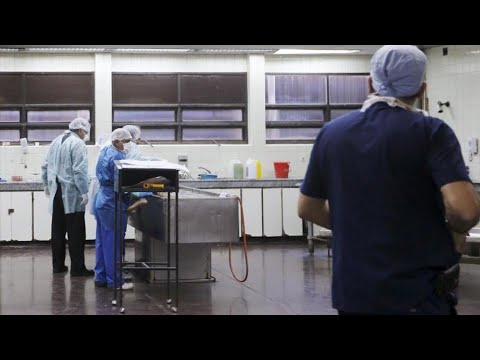
A case usually starts at the scene, where a coroner or their team documents the body's position and condition, talks to anyone present, and collects evidence relevant to time and manner of death. That evidence then feeds into a medicolegal exam or autopsy and toxicology testing back at the morgue, ending with a completed death certificate. Coroners also deliver difficult news to grieving families directly and may testify in court when a death's circumstances are disputed.
Pros
- Accessible entry point, needing only vocational training or an associate's degree
- Faster than average growth (3%) with a large national demand pool (33,300 jobs)
- High-trust civic role determining cause of death and giving families real answers
Cons
- Regular exposure to hazardous conditions and contaminants requires protective equipment
- Emotionally heavy work, regularly delivering difficult news to grieving families
- Above-average hours combined with fast-paced, real time pressure around investigations
A typical day
The overnight call log sets the morning: an unattended death at a private home, so the coroner heads to the scene — photographing the body's position, noting medications on the nightstand, interviewing the family member who found them, and making the first judgment about whether this looks natural or needs deeper investigation. Back at the office, the day divides between cases: reviewing toxicology results that just came back on a suspected overdose, conducting or attending an autopsy on a traffic fatality, and completing death certificates where cause and manner must be stated precisely because insurance, criminal cases, and grieving families all depend on the answer. Calls to next of kin are handled with practiced gentleness. The work is part science, part investigation, part public service to people on their worst day.
Tasks at the job
- Complete death certificates, including the assignment of cause and manner of death.
- Perform medicolegal examinations and autopsies, conducting preliminary examinations of the body to identify victims, locate signs of trauma, and identify factors that would indicate time of death.
- Interview persons present at death scenes to obtain information useful in determining the manner of death.
- Observe and record the positions and conditions of bodies and related evidence.
- Provide information concerning the circumstances of death to relatives of the deceased.
- Remove or supervise removal of bodies from death scenes, using the proper equipment and supplies, and arrange for transportation to morgues.
Workplace & working conditions
Work happens indoors in a climate-controlled setting, and you work in close physical proximity to coworkers or the public for much of the shift. The role involves regular exposure to hazardous equipment or conditions and contaminants, and standard protective equipment (gloves, safety glasses, and similar) is expected.
The pace is often fast, with real time pressure to meet deadlines, and you're expected to exercise significant independent judgment day to day. Precision and accuracy are essential to the work. You'll regularly deal with frustrated or upset people as part of the job.
Education necessary or common
Vocational training, apprenticeship, or associate's degree
Common college majors
Licenses & certifications
- ABMDI (American Board of Medicolegal Death Investigators) certification
- State coroner training/certification where required
Career path
Related fields
Courses to take
- AP Biology — anatomy and physiology are the foundation
- Chemistry — toxicology begins here
- Anatomy & Physiology — take it if your school offers it
- AP Psychology — death investigation involves grieving people
- English — reports and certificates are legal documents
Clubs, activities & competitions
- HOSA — medical knowledge competitions
- Science Olympiad anatomy and forensics events
- Forensics club or CSI-style summer camps
- Volunteer at a hospital or hospice
First steps you can take now
- Take a forensic science elective or free online forensic pathology intro
- Research your county's system: coroner (often elected) versus medical examiner (physician)
- Read a memoir by a medical examiner or death investigator
- Ask a funeral director or coroner's office about a career conversation