Photo: Sputnikcccp at English Wikipedia (CC BY-SA 3.0)
Job description
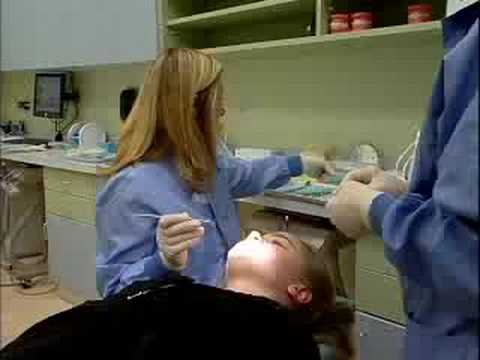
After examining a patient's bite and jaw structure, orthodontists design and fit appliances like space maintainers, retainers, and arch wires, then adjust them over repeat visits to keep treatment on track. They walk patients through proposed treatment plans and costs upfront and keep detailed diagnostic and treatment records throughout. The work is fast-paced, precise, and team-based, requiring both technical accuracy and steady patient communication over what's often a multi-year treatment course.
Pros
- Very high upside earning potential, with top pay reaching $416k
- Strong pay even at entry level, among the highest starting points in dentistry
- Faster than average projected job growth (4.4%) despite being a narrow specialty
Cons
- Requires a DDS or DMD plus an orthodontic residency, one of the longest paths in dental specialties
- A relatively small number of positions nationwide (200) makes the field highly specialized
- Fast-paced, precision-driven work where mistakes in appliance fitting can affect long-term outcomes
A typical day
The morning's new-patient consult is a nervous twelve-year-old with a crossbite: photos, a digital scan replacing the goopy impressions of old, and a cephalometric X-ray traced into a treatment plan the orthodontist presents to the family — eighteen months, clear expectations, financing options handled by the coordinator. The day's rhythm is volume with precision: forty adjustment visits, each a few minutes of wire changes, bracket checks, and elastics coaching, punctuated by the milestone appointments everyone loves — a bonding day starting a new smile, a debonding day revealing one, photographed to applause from the front desk. Midday holds an aligner case review on software, approving tooth movements frame by frame. The afternoon adds a retainer check, one broken-bracket emergency, and lab coordination. Few specialties see their results walk out smiling this literally.
Tasks at the job
- Fit dental appliances in patients' mouths to alter the position and relationship of teeth and jaws or to realign teeth.
- Adjust dental appliances to produce and maintain normal function.
- Provide patients with proposed treatment plans and cost estimates.
- Advise patients to comply with treatment plans.
- Prepare diagnostic and treatment records.
- Design and fabricate appliances, such as space maintainers, retainers, and labial and lingual arch wires.
Workplace & working conditions
Work happens indoors in a climate-controlled setting, and you work in close physical proximity to coworkers or the public for much of the shift. Standard safety equipment like gloves or safety glasses is commonly worn.
The pace is often fast, with real time pressure to meet deadlines, and you're expected to exercise significant independent judgment day to day. Precision and accuracy are essential to the work, and the work is highly structured, following set procedures. Almost all of the work is done as part of a team.
Education necessary or common
Doctor of Dental Surgery (DDS) or Doctor of Dental Medicine (DMD), plus an orthodontic residency
Common college majors
Licenses & certifications
- DDS/DMD and state dental license
- American Board of Orthodontics certification
Career path
Related fields
Courses to take
- AP Biology — the predental foundation
- AP Chemistry — dental school's prerequisite spine
- Anatomy and Physiology — craniofacial growth becomes professional territory
- AP Physics — orthodontic forces are physics applied gently over months
- Art or Sculpture — an aesthetic eye and steady hands both matter
Clubs, activities & competitions
- HOSA-Future Health Professionals
- Volunteer or observe at dental clinics
- Fine motor crafts — wire jewelry making is unironically on-theme
- Science Olympiad — anatomy events
First steps you can take now
- Shadow your own orthodontist — you have literal insider access most careers can't offer
- Also shadow a general dentist to see the referral pipeline
- Map the path: dental school, then a competitive 2-3 year orthodontics residency
- Ask an orthodontist how aligner technology changed their practice — the field is actively evolving