Photo: Bidgee (CC BY-SA 3.0)
Job description
Before a shoot, videographers plan out shots, angles, and equipment needs, then set up cameras, lighting, and audio on location and adjust in real time as conditions change during filming. The job doesn't end when the camera stops rolling: editing raw footage into a finished product, color-correcting, mixing audio, and adding titles or music takes real time at a computer afterward, often stacked onto the end of a long shooting day. Many videographers work freelance across a mix of clients rather than for a single employer, which means constantly aligning the final product with a new client's vision each time. Because live events don't allow for a second take, the work rewards staying calm and adaptable when equipment or conditions don't cooperate.
Pros
- No formal degree required, a strong demo reel can open doors on its own
- Varied work across different projects and clients rather than one routine setting
- Creative control over both the shoot and the final edited product
Cons
- Above-average hours, expect more than a standard 40-hour work week, often stacking editing time onto shoot days
- Live events leave no room for a second take when equipment or conditions don't cooperate
- Freelance-heavy work across multiple clients means inconsistent, project-based income
A typical day
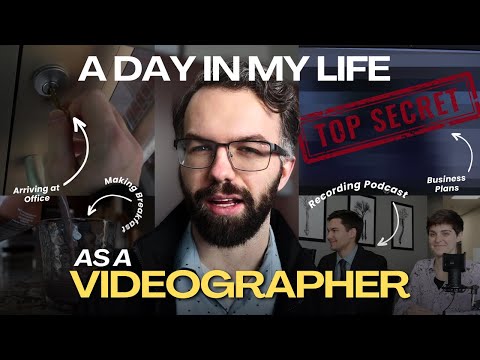
The morning shoot is a client's brand video: gear checked twice the night before, lights set, and interview questions asked from behind the camera to draw natural answers. The real skill shows in adaptation -- the office location is smaller and louder than promised, so the shot list gets reinvented on the spot. The afternoon belongs to the edit bay: cutting last weekend's wedding film, syncing multicam footage, color grading, and choosing the vows moment that will make the couple cry. The day ends with client emails, a quote for a nonprofit shoot, and batteries charging for tomorrow.
Tasks at the job
- Plan shots, angles, and equipment needs ahead of a shoot.
- Set up cameras, lighting, and audio equipment on location.
- Film events, interviews, or projects, adjusting to changing conditions in real time.
- Edit raw footage into a finished video, adding titles, music, or effects.
- Back up and organize footage to prevent data loss.
- Communicate with clients to align the final product with their vision.
Workplace & working conditions
Work happens on location, which varies widely by project -- indoors, outdoors, at events, or in a studio -- followed by editing time at a computer.
Live events leave no room for a second take, so the work requires staying calm and adaptable when equipment or conditions don't cooperate. Editing deadlines can mean long hours at a screen after a full day of shooting.
Education necessary or common
No formal degree required, though many study film or media production; a strong demo reel matters more than a credential
Licenses & certifications
- FAA Part 107 (drone operations, opens paid aerial work)
Career path
Related fields
Courses to take
- Film/media production electives -- the craft, hands-on
- Art or photography -- composition and light
- English or AP Literature -- storytelling structure drives editing
- Business math -- freelance videography is a business
- Physics -- optics and light behave lawfully
Clubs, activities & competitions
- Film club or school broadcast program
- Shoot everything: sports, theater, events -- reps build the reel
- Enter student film festivals
- Yearbook or media team video work
First steps you can take now
- Shoot and edit one complete two-minute video this month with whatever camera you have
- Learn one editor (DaVinci Resolve is free and professional)
- Offer to film a local event free in exchange for portfolio rights
- Study one great videographer's work shot by shot