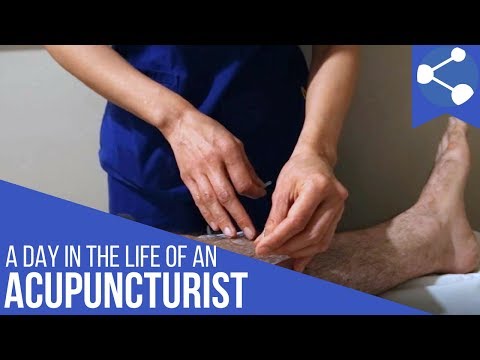
Photo: Nargis (CC BY-SA 3.0)
Job description
Before any needles come out, an acupuncturist takes a full medical history and lifestyle picture of the patient, then identifies the correct points for treatment based on that person's anatomy and specific condition. Many also bring in complementary techniques like cupping, moxibustion, acupressure, or nutritional supplements alongside needling. The work follows strict infection-control and safety protocols and happens in close physical proximity to patients, and becoming licensed typically requires a master's degree in acupuncture or Oriental medicine plus a state licensing exam.
Pros
- Faster than average projected job growth (6.8%)
- Master's-level entry, without the medical school or lengthy residency most clinical roles require
- Hands-on, alternative-medicine practice often run as an independent practice
Cons
- Wide pay range with a low floor, entry-level pay as low as $38,830
- Above-average hours, more than a standard 40-hour work week
- A relatively small field nationally, so opportunities may be geographically limited
A typical day
Patients arrive on the half hour: first a runner with a stubborn hamstring, then an office worker with migraines, each visit opening with a quiet intake conversation about sleep, stress, and symptoms. The practitioner selects points, places hair-thin needles, dims the lights, and lets the patient rest for twenty minutes while charting the last case and sterilizing the next room. Between sessions there's the unglamorous side of a mostly self-employed field — insurance billing, supply orders, returning new-patient calls. The rhythm is calm by design; the clinic's atmosphere is part of the treatment.
Tasks at the job
- Adhere to local, state, and federal laws, regulations, and statutes.
- Insert needles to provide acupuncture treatment.
- Identify correct anatomical and proportional point locations based on patients' anatomy and positions, contraindications, and precautions related to treatments, such as intradermal needles, moxibustion, electricity, guasha, or bleeding.
- Collect medical histories and general health and lifestyle information from patients.
- Treat patients using tools, such as needles, cups, ear balls, seeds, pellets, or nutritional supplements.
- Maintain and follow standard quality, safety, environmental, and infection control policies and procedures.
Workplace & working conditions
Work happens indoors in a climate-controlled setting, and you work in close physical proximity to coworkers or the public for much of the shift.
There's a regular, moderate amount of time pressure, and you're expected to exercise significant independent judgment day to day. The work is highly structured, following set procedures.
Education necessary or common
Master's degree in acupuncture or Oriental medicine, plus state licensure
Common college majors
Licenses & certifications
- State acupuncture licensure
- NCCAOM board certification
- Clean Needle Technique certification
Career path
Related fields
Courses to take
- AP Biology — you'll study anatomy and physiology for years, start now
- Anatomy & Physiology if your school offers it
- AP Psychology — pain and stress have minds attached
- Chemistry — required for most graduate health programs
- Mandarin Chinese — much of the field's source literature and terminology is Chinese
Clubs, activities & competitions
- HOSA — Future Health Professionals
- Volunteer at a hospital, hospice, or physical therapy clinic
- Yoga, tai chi, or martial arts practice — bodywork traditions overlap
- Peer wellness or mental health club
First steps you can take now
- Book a session at a community acupuncture clinic and pay attention to the practitioner's workflow
- Ask a licensed acupuncturist for a 20-minute informational interview about training costs and building a practice
- Learn 20 major anatomical structures with a free anatomy app
- Look up your state's licensure requirements and which accredited master's programs feed it