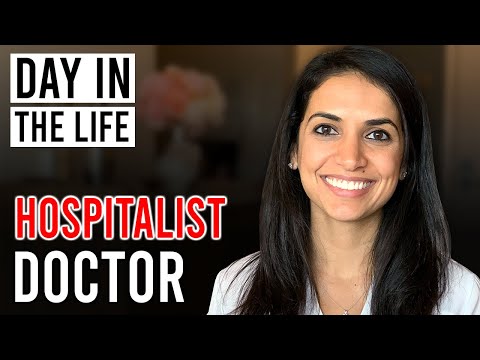
Photo: Unknown authorUnknown author (Public domain)
Job description
A hospitalist diagnoses and treats inpatients, orders and interprets tests like labs and X-rays, and prescribes medication and treatment plans throughout a hospital stay. They handle both ends of a stay directly: admitting patients, and later planning and writing up a discharge summary to send to the patient's regular doctor. The pace is often fast and unpredictable, with real pressure to make accurate calls quickly since mistakes can have serious consequences, and the role involves regular contact with anxious patients and families as well as close teamwork with nursing staff. Reaching this role requires an MD or DO plus residency training in the specialty.
Pros
- Very high upside pay, topping out at $452k for experienced hospital-based physicians
- Strong demand with 9,600 positions nationwide, a relatively large specialty
- Focused entirely on inpatient care, avoiding the overhead of running an outpatient practice
Cons
- Above-average hours, expect more than a standard 40-hour work week
- Fast-paced, high-stakes environment where mistakes can have serious consequences for patients
- Regular exposure to contaminants and frequent contact with frustrated or distressed patients and families
A typical day
Sign-out from the night doctor starts the day at 7am — eighteen admitted patients, two unstable, one ready for discharge if the morning labs cooperate. Rounds consume the morning: examining each patient, adjusting medications, explaining a biopsy result in words a frightened family can hold onto, and coordinating with the cardiologist about a shared patient. A rapid response call interrupts lunch — a patient on the fourth floor dropping their blood pressure — and the hospitalist runs the bedside decision-making until the ICU takes over. The afternoon is admissions from the ER, each a fresh diagnostic workup, plus the documentation that never ends. Sign-out at 7pm hands the service to the night team; hospitalists typically work seven days on, seven off, and the off week is real.
Tasks at the job
- Diagnose, treat, or provide continuous care to hospital inpatients.
- Prescribe medications or treatment regimens to hospital inpatients.
- Order or interpret the results of tests such as laboratory tests and radiographs (x-rays).
- Admit patients for hospital stays.
- Conduct discharge planning and discharge patients.
- Write patient discharge summaries and send them to primary care physicians.
Workplace & working conditions
Work happens indoors in a climate-controlled setting, and you work in close physical proximity to coworkers or the public for much of the shift. The role involves regular exposure to contaminants, and specialized protective equipment is standard.
The pace is often fast, with real time pressure to meet deadlines, and you're expected to exercise significant independent judgment day to day. Mistakes can have serious consequences, so accuracy matters a lot. You'll regularly deal with frustrated or upset people as part of the job, and almost all of the work is done as part of a team.
Education necessary or common
Doctor of Medicine (MD) or Doctor of Osteopathic Medicine (DO), plus residency training in the specialty
Common college majors
Licenses & certifications
- MD or DO degree plus internal medicine residency — the defining path
- Board certification in Internal Medicine (ABIM) or Family Medicine
- State medical license
- ACLS/BLS certification
Career path
Related fields
Courses to take
- AP Biology — the first pillar of the pre-med foundation
- AP Chemistry — required territory for medical school admission
- AP Calculus or AP Statistics — medical schools expect quantitative rigor (statistics arguably serves medicine better)
- Anatomy and Physiology — a preview of the material that fills medical school
- AP Psychology — patient communication and behavior are daily clinical tools
- AP English Language — medicine runs on precise written communication
Clubs, activities & competitions
- HOSA — the flagship pre-health student organization
- Hospital volunteering — evidence you know what clinical environments feel like
- Science Olympiad — anatomy and disease-focused events
- EMT club or certification course where age permits
- Peer tutoring in science — teaching cements mastery
First steps you can take now
- Volunteer at a hospital and ask to be placed on an inpatient floor
- Shadow a physician — a family doctor works; an actual hospitalist is better
- Get CPR/BLS certified this month
- Read about the path honestly: four years of college, four of medical school, three of internal medicine residency