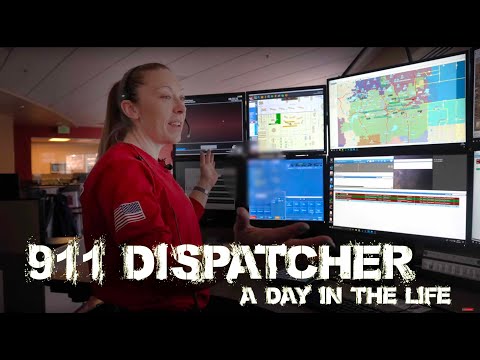
Photo: Mark Wolfe (Public domain)
Job description
Every call starts with fast, precise questioning to pin down a caller's location and the nature of the problem, then deciding how urgently to respond and who to send. Telecommunicators relay details to responders in the field, monitor multiple radio channels for developing situations, and keep records of every call and dispatch. Some are also certified to walk a caller through emergency instructions, like CPR, while help is on the way. It's fast-paced, high-stakes work done mostly at a desk, where a single error in judgment can have real consequences for someone in danger.
Pros
- Pay can reach nearly $80k with only a high school diploma required
- Faster than average job growth (3.5%) for a role with meaningful public-safety impact
- High-stakes, team-based work directly coordinating emergency response
Cons
- Above-average hours, often 40-50 per week including nights, weekends, and holidays
- Constant exposure to distressed, frightened, or frustrated callers in emergency situations
- Fast-paced, high-precision decisions where mistakes can affect real emergency outcomes
A typical day
The headset goes on at 6am and the first call arrives before the coffee does: a medical call where the dispatcher keys the ambulance out while simultaneously coaching the caller through CPR, voice steady, cadence exact, until crews take over. Between emergencies the console hums with radio traffic — officers marking traffic stops, a unit requesting a plate check — all tracked because knowing where every responder is can save one. A frantic caller can't say where she is; the dispatcher works the problem with landmarks and mapping tools while typing updates responders read in real time. The shift ends mid-story, as it always does, handing live incidents to the next voice.
Tasks at the job
- Question callers to determine their locations and the nature of their problems to determine type of response needed.
- Determine response requirements and relative priorities of situations, and dispatch units in accordance with established procedures.
- Relay information and messages to and from emergency sites, to law enforcement agencies, and to all other individuals or groups requiring notification.
- Record details of calls, dispatches, and messages.
- Monitor various radio frequencies, such as those used by public works departments, school security, and civil defense, to stay apprised of developing situations.
- Read and effectively interpret small-scale maps and information from a computer screen to determine locations and provide directions.
Workplace & working conditions
Work happens indoors in a climate-controlled setting, and most of the day is spent sitting at a desk. Noise levels can be distracting or uncomfortable.
The pace is often fast, with real time pressure to meet deadlines, and you're expected to exercise significant independent judgment day to day. Precision and accuracy are essential to the work. You'll regularly deal with frustrated or upset people as part of the job, and almost all of the work is done as part of a team.
Education necessary or common
High school diploma; some on-the-job training or apprenticeship
Licenses & certifications
- Emergency Medical Dispatch (EMD) certification
- APCO/NENA telecommunicator certifications
- CPR
- State-specific dispatch certification
Career path
Related fields
Courses to take
- English — precise listening and communication under pressure
- Computer Applications — multi-screen CAD systems are the workspace
- Psychology — managing callers in crisis
- Geography — local spatial knowledge routes responders
- Health/First Aid — emergency medical dispatch protocols
Clubs, activities & competitions
- Police or Fire Explorers programs
- Amateur radio club — real radio discipline
- First aid/CPR training and Red Cross club
- Fast-paced multitasking jobs: drive-through, busy restaurant host
First steps you can take now
- Get CPR certified this month — dispatchers give these instructions by phone
- Tour your local 911 center — many host students and observers
- Practice typing to 40+ WPM while listening to spoken audio
- Look up your county's dispatcher hiring process: typing test, CritiCall exam, background check