Photo: PEO ACWA (CC BY 2.0)
Job description
Working mostly by phone, radio, and computer, dispatchers put together the day's work orders and schedules, deciding who goes where and adjusting on the fly when something goes wrong, like a truck breakdown or bad weather closing a route. Keeping accurate records matters as much as the scheduling itself: logging customer requests, tracking charges and inventory, and documenting what work actually got done. Because the job sits between customers, field crews, and management, dispatchers spend a lot of time fielding questions and complaints and relaying updates in both directions. It's a desk-based role that runs at a fast, structured pace, especially when unexpected problems pile up during a shift.
Pros
- Pay can climb to $78k without needing more than a high school diploma and on-the-job training
- A central coordinating role requiring quick independent judgment rather than rote repetition
- Desk-based indoor work protected from weather and physical strain
Cons
- Above-average hours, often exceeding a standard 40-hour week to cover dispatch schedules
- Employment projected to shrink slightly (-0.9%) as routing software takes over some coordination
- Constant time pressure and frequent contact with frustrated customers or crews create ongoing stress
A typical day
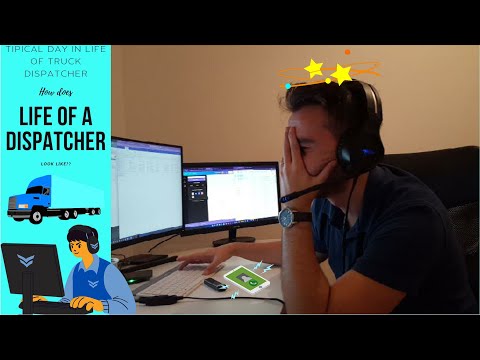
The board shows fourteen service calls and six trucks, and the 7am puzzle is matching them: the no-heat call with the elderly customer jumps the queue, the tech with the right van stock gets the water heater job, and the two downtown calls get paired to kill the drive time. Then the day starts moving and never stops — a tech stuck on a job that's doubled in scope, a customer calling twice about an ETA, a truck breakdown that forces a reshuffle of the whole afternoon. The dispatcher works three screens and a headset, logging everything: times, work orders, parts requests, the customer complaint that needs a supervisor callback. Good dispatchers hold the whole day's geometry in their heads and stay warm on the phone while doing it; the drivers' trust in you is the real operating system.
Tasks at the job
- Confer with customers or supervising personnel to address questions, problems, or requests for service or equipment.
- Receive or prepare work orders.
- Record and maintain files or records of customer requests, work or services performed, charges, expenses, inventory, or other dispatch information.
- Arrange for necessary repairs to restore service and schedules.
- Advise personnel about traffic problems, such as construction areas, accidents, congestion, weather conditions, or other hazards.
- Prepare daily work and run schedules.
Workplace & working conditions
Work happens indoors in a climate-controlled setting, and most of the day is spent sitting at a desk.
The pace is often fast, with real time pressure to meet deadlines, and you're expected to exercise significant independent judgment day to day. Precision and accuracy are essential to the work, and the work is highly structured, following set procedures. You'll regularly deal with frustrated or upset people as part of the job, and almost all of the work is done as part of a team.
Education necessary or common
High school diploma; some on-the-job training or apprenticeship
Licenses & certifications
- Dispatch/service software certifications (employer-provided)
Career path
Related fields
Courses to take
- Geography — routing logic is spatial reasoning
- Computer applications — dispatch software and logs
- Business Math — scheduling and job costing
- English — clear radio and phone communication
- Psychology — managing stressed customers and tired crews
Clubs, activities & competitions
- School office aide — multi-line phone practice
- Manage logistics for a team or club: schedules, equipment, transport
- Amateur radio club
- Fast-paced part-time work: drive-through, host stand
First steps you can take now
- Take a customer service job with phone and scheduling duties
- Learn a map cold: practice routing three stops efficiently in your town
- Ask a service company (HVAC, plumbing) if you can sit with their dispatcher for a morning
- Practice calm multitasking: take notes accurately during a phone call