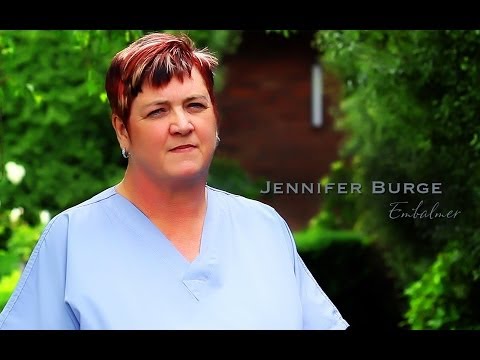
Photo: Jeremy Thompson (CC BY 2.0)
Job description
The process begins with transporting the deceased to the funeral home, then making incisions to drain blood from the circulatory system and replace it with embalming fluid using a pump, followed by cosmetic work to restore a lifelike look before dressing the body and placing it in a casket. The work happens under strict legal and sanitation requirements, since mistakes carry real consequences, and it's usually paired with broader funeral home duties as staff gain experience. Some embalmers go on to become licensed funeral directors or eventually open their own funeral homes.
Pros
- Entry requires only vocational training or an associate's degree, not a four-year degree
- Structured, well-defined procedures to follow rather than open-ended problem solving
- Stable, essential service work tied to funeral homes rather than economic cycles
Cons
- Slower than average projected job growth (1.3%) and few positions nationwide
- Regular exposure to hazardous equipment, chemicals, and biological contaminants
- Emotionally heavy work that involves regularly interacting with grieving families
A typical day
Work often begins with a transfer — meeting a funeral home van and bringing the deceased into the preparation room, where every case starts with paperwork verifying authorization. The embalming itself is quiet, technical work: raising an artery, setting the injection machine, monitoring drainage, and adjusting fluid chemistry for the person's condition. Afternoon is restorative art — suturing, setting facial features, and applying cosmetics so the family sees someone who looks at peace. Between cases the room is scrubbed to clinical standards, because sanitation law governs everything in this profession.
Tasks at the job
- Conform to laws of health and sanitation and ensure that legal requirements concerning embalming are met.
- Apply cosmetics to impart lifelike appearance to the deceased.
- Incise stomach and abdominal walls and probe internal organs, using trocar, to withdraw blood and waste matter from organs.
- Dress bodies and place them in caskets.
- Make incisions in arms or thighs and drain blood from circulatory system and replace it with embalming fluid, using pump.
- Remove the deceased from place of death and transport to funeral home.
Workplace & working conditions
Work happens indoors in a climate-controlled setting, and you work in close physical proximity to coworkers or the public for much of the shift. The role involves regular exposure to hazardous equipment or conditions and contaminants, and specialized protective equipment is standard.
The pace is often fast, with real time pressure to meet deadlines, and you're expected to exercise significant independent judgment day to day. Mistakes can have serious consequences, so accuracy matters a lot, and the work is highly structured, following set procedures. You'll regularly deal with frustrated or upset people as part of the job.
Education necessary or common
Vocational training, apprenticeship, or associate's degree
Common college majors
Licenses & certifications
- State embalmer license (required everywhere)
- National Board Examination (NBE)
- Registered apprenticeship under a licensed embalmer
Career path
Related fields
Courses to take
- Anatomy & Physiology — the single most directly relevant course offered in high school
- AP Biology — microbiology and decomposition science underpin the work
- Chemistry — embalming fluids are applied chemistry
- Art (drawing/sculpture) — restorative work is a sculptor's skill set
- Psychology — you will work around grieving families constantly
Clubs, activities & competitions
- HOSA (Future Health Professionals) — comfort with clinical settings and terminology
- Volunteer at a hospice or hospital — learn to be calm and respectful around death
- Art club with a focus on portraiture or sculpture
- Part-time job at a funeral home (some hire high schoolers for services and transport)
First steps you can take now
- Call a local funeral home and ask for a tour and an honest conversation about the work
- Watch a licensed embalmer describe their day (mortuary schools post real interviews)
- Take Anatomy & Physiology at the first opportunity
- Look up your state's embalmer license requirements — most require mortuary school plus apprenticeship