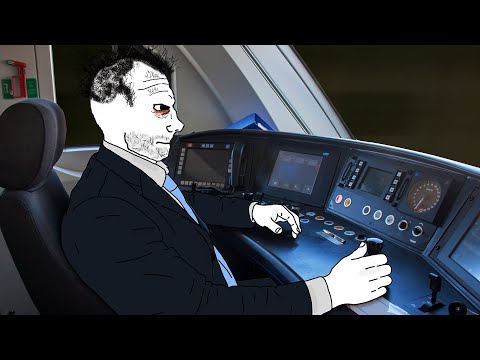
Photo: Ex13 (CC BY-SA 4.0)
Job description
Beyond just running the controls, operators are constantly watching signal lights, road crossings, and the track ahead for anything that could turn into a hazard, while also pacing the trip to hit each stop on schedule. Announcing stops, answering rider questions about fares and routes, and reporting any mechanical trouble or delay back to a dispatcher by radio round out the job. Because a lapse in attention can have serious consequences, the work calls for constant, quick decision-making, and operators regularly deal with impatient or upset passengers along the way.
Pros
- Faster than average projected job growth (3.4%) with a strong pay ceiling ($90,140)
- Achievable with just a HS diploma and on-the-job training, no college degree required
- Constant, real-time decision-making keeps the work engaging rather than repetitive
Cons
- Above-average hours, expect more than a standard 40-hour work week
- Very small job market of about 900 positions nationwide
- Regularly deals with frustrated or upset passengers while operating in close quarters with the public
A typical day
The shift begins in the crew room with a fitness-for-duty check and the day's orders: track work near two stations means speed restrictions to memorize. In the cab, the routine is anything but casual -- every signal called out, every station approach timed, doors watched on the platform side before a single car moves. Midday brings the unglamorous test of the job: a sick passenger at rush hour, handled by the book while the radio coordinates and the schedule strains. The run sheet gets turned in at shift's end, delays documented to the minute.
Tasks at the job
- Report delays, mechanical problems, and emergencies to supervisors or dispatchers, using radios.
- Regulate vehicle speed and the time spent at each stop to maintain schedules.
- Make announcements to passengers, such as notifications of upcoming stops or schedule delays.
- Greet passengers, provide information, and answer questions concerning fares, schedules, transfers, and routings.
- Monitor lights indicating obstructions or other trains ahead and watch for car and truck traffic at crossings to stay alert to potential hazards.
- Operate controls to open and close transit vehicle doors.
Workplace & working conditions
Work happens mostly inside a vehicle or piece of equipment, and most of the day is spent sitting at a desk. Noise levels can be distracting or uncomfortable. The role involves regular exposure to hazardous equipment or conditions and contaminants, and standard protective equipment (gloves, safety glasses, and similar) is expected.
There's a regular, moderate amount of time pressure, and decisions come up constantly and often need to be made quickly. Mistakes can have serious consequences, so accuracy matters a lot. You'll regularly deal with frustrated or upset people as part of the job.
Education necessary or common
High school diploma; some on-the-job training or apprenticeship
Licenses & certifications
- Transit agency operator certification (provided in training)
Career path
Related fields
Courses to take
- Physical education -- alertness and health are safety requirements
- Physics -- braking distance and momentum are operational realities
- Geography -- route and system knowledge
- English -- radio communication and incident reports must be exact
Clubs, activities & competitions
- A part-time job with real shift responsibility
- Transit or railfan clubs -- system knowledge runs deep in this field
- Volunteer roles requiring procedures and checklists
- First aid/CPR training through a school program
First steps you can take now
- Ride your nearest rail system and study how operators announce, time doors, and handle delays
- Look up your transit agency's operator hiring page -- many promote from station or bus roles
- Get CPR/First Aid certified
- Practice a month of early consistent wake-ups -- shift work is the job's hidden test