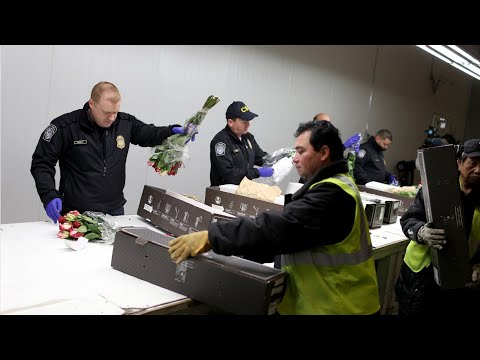
Photo: CBP Photography (Public domain)
Job description
Officers review passports, visas, and immigration applications while interviewing travelers to determine who can legally cross, then inspect baggage and cargo for anything undeclared or prohibited. When something turns up, they can detain a person or seize goods and help build the case for prosecution or deportation, often working alongside other federal agencies in the process. It's a role with real stakes for mistakes, done in close, constant contact with the public at a checkpoint or port of entry, and it typically requires vocational training or an associate's degree rather than a four-year degree.
Pros
- Faster than average job growth (3.1%) with a large nationwide job base
- Pay tops out above $115k, well above many vocational- or associate's-level roles
- Federal law enforcement authority spanning interviews, inspection, and casework
Cons
- Above-average hours, typically more than a standard 40-hour week
- Constant, close contact with frustrated or upset travelers
- High-stakes decisions under time pressure, where mistakes have serious legal consequences
A typical day
The 6am shift at the airport starts at the primary inspection booth: passport, a few questions, a decision — sixty seconds per traveler, hundreds of times, with instincts tuned for the answer that doesn't fit the documents. A referral to secondary means deeper work: a records check that surfaces an immigration violation, an interview conducted firmly and fairly, paperwork for a formal removal proceeding. Rotation keeps the day varied — cargo inspection with an X-ray and a K-9 team, where a shipment manifested as machine parts turns out to hide undeclared merchandise, or baggage examination where seized contraband gets inventoried and documented for prosecution. The badge carries real authority at the border; the training drills that authority in law, not improvisation.
Tasks at the job
- Examine immigration applications, visas, and passports and interview persons to determine eligibility for admission, residence, and travel in the U.S.
- Detain persons found to be in violation of customs or immigration laws and arrange for legal action, such as deportation.
- Inspect cargo, baggage, and personal articles entering or leaving U.S. for compliance with revenue laws and U.S. customs regulations.
- Locate and seize contraband, undeclared merchandise, and vehicles, aircraft, or boats that contain such merchandise.
- Interpret and explain laws and regulations to travelers, prospective immigrants, shippers, and manufacturers.
- Institute civil and criminal prosecutions and cooperate with other law enforcement agencies in the investigation and prosecution of those in violation of immigration or customs laws.
Workplace & working conditions
Work happens indoors in a climate-controlled setting, and you work in close physical proximity to coworkers or the public for much of the shift. Noise levels can be distracting or uncomfortable. The role involves regular exposure to hazardous equipment or conditions and contaminants.
There's a regular, moderate amount of time pressure, and you're expected to exercise significant independent judgment day to day. Mistakes can have serious consequences, so accuracy matters a lot. You'll regularly deal with frustrated or upset people as part of the job, and almost all of the work is done as part of a team.
Education necessary or common
Vocational training, apprenticeship, or associate's degree
Licenses & certifications
- CBP academy training (federal, provided)
- Firearms and use-of-force qualifications (agency-provided)
Career path
Related fields
Courses to take
- AP U.S. Government — immigration and customs law is federal law
- Spanish or another world language — a genuine hiring advantage
- AP Psychology — interviewing and deception detection
- Geography — trade routes and world awareness
- PE — fitness standards apply
Clubs, activities & competitions
- Law enforcement Explorer post
- JROTC
- Debate — structured questioning skills
- Team sports — the academy is physical
- Model UN — international awareness
First steps you can take now
- Read the CBP officer hiring requirements — age, fitness, background standards
- Keep your record clean — background investigations are thorough
- Build a fitness habit to law-enforcement academy standards
- Talk to a federal officer at a career fair about the polygraph-and-academy pipeline