Photo: Cory Payne (Public domain)
Job description
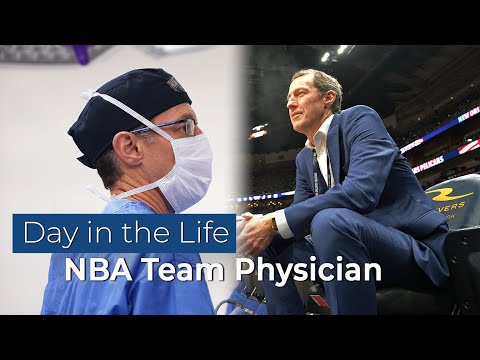
A typical day might mix clinic visits with sideline coverage at games, ordering imaging to confirm a diagnosis, and briefing coaches and trainers on an athlete's condition. Physicians examine athletes before competition to gauge overall fitness and injury risk, then diagnose and treat musculoskeletal problems as they occur, weighing carefully whether resuming play could cause further harm. Many build long-term relationships with specific teams or schools, and some specialize further in areas like concussion management or joint reconstruction.
Pros
- Very high upside pay, topping out at $452k, similar to other physician specialties
- Active, hands-on role working directly with athletes rather than confined to an office
- Direct involvement in sports and athletic events adds variety beyond a typical clinic setting
Cons
- Above-average hours, expect more than a standard 40-hour work week
- On your feet for much of the shift, evaluating athletes at competitions and training sites
- Long training path of medical school plus residency before practicing independently
A typical day
Clinic starts at 8 with a high school pitcher whose elbow MRI is up on the screen -- the conversation about rest versus surgery involves the athlete, a parent, and a season on the line. The morning continues through a runner's stress fracture, an ultrasound-guided injection, and a concussion follow-up where return-to-play protocol is non-negotiable no matter who's pressuring for Friday. The afternoon is sideline duty at a university practice, taping, evaluating a rolled ankle in real time, and updating the athletic trainers. Charting spills into the evening, as it does for every physician.
Tasks at the job
- Diagnose or treat disorders of the musculoskeletal system.
- Examine and evaluate athletes prior to participation in sports activities to determine level of physical fitness or predisposition to injuries.
- Inform coaches, trainers, or other interested parties regarding the medical conditions of athletes.
- Select and prepare medical equipment or medications to be taken to athletic competition sites.
- Order and interpret the results of laboratory tests and diagnostic imaging procedures.
- Advise against injured athletes returning to games or competition if resuming activity could lead to further injury.
Workplace & working conditions
Work happens indoors in a climate-controlled setting, and most of the day is spent on your feet, and you work in close physical proximity to coworkers or the public for much of the shift. Standard safety equipment like gloves or safety glasses is commonly worn.
There's a regular, moderate amount of time pressure, and you're expected to exercise significant independent judgment day to day. Mistakes can have serious consequences, so accuracy matters a lot, and the work is highly structured, following set procedures. You'll regularly deal with frustrated or upset people as part of the job.
Education necessary or common
Doctor of Medicine (MD) or Doctor of Osteopathic Medicine (DO), plus residency training in the specialty
Common college majors
Licenses & certifications
- MD/DO state medical license
- Board certification with sports medicine CAQ
Career path
Related fields
Courses to take
- AP Biology -- the pre-med foundation
- AP Chemistry -- required territory for medical school
- Anatomy & Physiology -- the daily language of sports injuries
- AP Psychology -- injured athletes are patients under stress
- AP Calculus or AP Statistics -- pre-med math expectations
Clubs, activities & competitions
- HOSA -- health-professions competitions and community
- Play a sport -- inside knowledge of the athlete's mindset
- Volunteer or student-aide with your school's athletic trainer
- Hospital or sports-medicine clinic volunteering
First steps you can take now
- Ask your school's athletic trainer if you can assist at games this season
- Get CPR/First Aid certified this month
- Shadow a sports medicine physician or physical therapist
- Map the full path honestly: pre-med, MD/DO, residency, sports medicine fellowship