Photo: Anthony Lazzaro (Public domain)
Job description
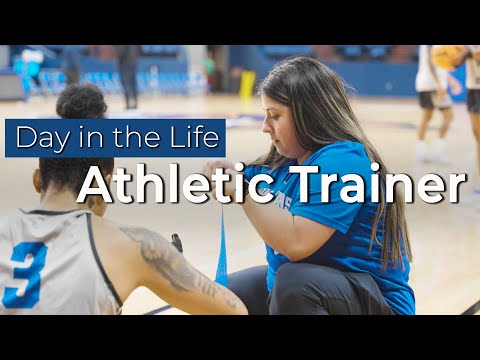
When an athlete gets hurt, the trainer does the first assessment, deciding whether the injury needs continued on-site care or a referral to a physician for diagnosis and treatment. From there, the job includes using physical therapy equipment and techniques to treat injuries, tracking a recovering athlete's progress and reporting it to coaches or physicians, and clearing athletes as fit to return to play. It's a hands-on, team-embedded role that also comes with real administrative load: keeping records, writing reports, and keeping the training room clean and sanitized.
Pros
- Much faster than average projected growth (11.1%) with rising demand across sports and clinical settings
- Combines hands-on injury care with real-time decisions on an athlete's readiness to play
- Master's-level credential commands solid pay (up to $89k) in a growing specialty field
Cons
- Above-average hours, expect more than a standard 40-hour work week, including evenings and weekends for games
- Only about 2,400 positions nationwide, so opportunities may be geographically limited
- Requires a master's degree plus certification before practicing independently
A typical day
Taping starts at 2pm: a line of ankles and wrists before practice, each wrap a small clinical decision. Earlier, the trainer worked treatment hours — progressing a sprinter's hamstring rehab with measured loads, reassessing a swollen knee that isn't improving on schedule and needs a physician referral. During football practice the AT watches from the sideline with eyes trained for the collision that looks wrong, ready to run the concussion protocol without negotiation. An evening game means being first onto the field when a player stays down, the calm voice in the loudest moment. Documentation closes the night; the training room reopens ten hours later.
Tasks at the job
- Conduct an initial assessment of an athlete's injury or illness to provide emergency or continued care and to determine whether they should be referred to physicians for definitive diagnosis and treatment.
- Assess and report the progress of recovering athletes to coaches or physicians.
- Care for athletic injuries, using physical therapy equipment, techniques, or medication.
- Evaluate athletes' readiness to play and provide participation clearances when necessary and warranted.
- Perform general administrative tasks, such as keeping records or writing reports.
- Clean and sanitize athletic training rooms.
Workplace & working conditions
Work happens indoors in a climate-controlled setting, and you work in close physical proximity to coworkers or the public for much of the shift. Noise levels can be distracting or uncomfortable.
There's a regular, moderate amount of time pressure, and you're expected to exercise significant independent judgment day to day. Precision and accuracy are essential to the work. You'll regularly deal with frustrated or upset people as part of the job, and almost all of the work is done as part of a team.
Education necessary or common
Master's degree from an accredited athletic training program, plus certification
Common college majors
Licenses & certifications
- BOC certification (ATC) — the defining credential
- State licensure
- CPR/AED for the Professional Rescuer
Career path
Related fields
Courses to take
- Anatomy & Physiology — the single most important course
- AP Biology
- AP Psychology — injured athletes are stressed humans
- Chemistry
- Sports Medicine elective if your school offers one
Clubs, activities & competitions
- Student athletic training aide program — many high schools let students assist the AT
- HOSA — sports medicine competitive events
- Play a sport — inside knowledge of demands and culture
- First aid/CPR certification and school event medical volunteering
First steps you can take now
- Ask your school's athletic trainer to take you on as a student aide this season
- Get CPR/AED certified now
- Learn to tape an ankle properly from your AT and practice until it's clean
- Shadow in a sports medicine or physical therapy clinic for a day