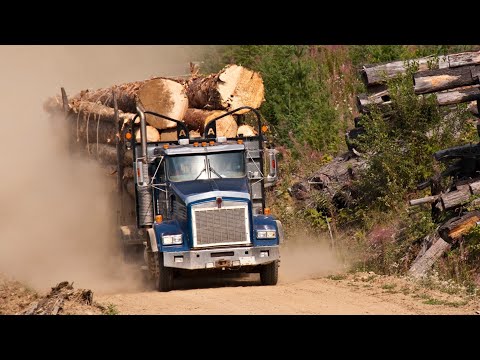
Photo: VTmaddogVT (Public domain)
Job description
Using scale sticks and other measuring devices, graders jab and inspect logs for characteristics like water damage, splits, knots, and twists, then apply established criteria to assign a grade and calculate volume, weight, and marketable value with conversion tables. Substandard logs get flagged so they can be returned to shippers or reprocessed, and graders record data about individual trees or loads into tally books or handheld terminals as they go. The work happens outdoors in all weather, involves exposure to hazardous equipment, and requires the kind of independent judgment that comes with experience reading wood.
Pros
- Low educational barrier to entry, just a high school diploma and on-the-job training
- Independent, hands-on outdoor work assessing timber quality using established grading criteria
- Pay can reach over $62k in mill or forestry operations
Cons
- Above-average hours, often 40-50 per week
- Employment in this field is projected to shrink slightly over the next decade (-0.7%)
- A relatively small number of positions nationwide, with outdoor exposure to weather and hazardous equipment
A typical day
The sort yard wakes with the first log trucks at 6:30, and the scaler climbs the loads with a scale stick and a data recorder, measuring diameters and lengths, converting to board feet by rules older than the mill. Grading is the judgment half: reading each log's story — a sweep here, ring shake there, a knot cluster that drops a would-be veneer log to saw grade — because the grade sets the price and both the logger and the mill are counting on the call being right. Mid-morning brings a disputed load; the scaler re-measures with the seller watching and walks through the defects openly, and the number stands because the method was transparent. The afternoon alternates between inbound trucks and check-scaling audits of yesterday's work (accuracy is audited in this trade, formally). Rain or shine, the yard runs; the scaler's tally is the day's ledger, and honest measurement is the entire profession.
Tasks at the job
- Paint identification marks of specified colors on logs to identify grades or species, using spray cans, or call out grades to log markers.
- Jab logs with metal ends of scale sticks, and inspect logs to ascertain characteristics or defects such as water damage, splits, knots, broken ends, rotten areas, twists, and curves.
- Evaluate log characteristics and determine grades, using established criteria.
- Record data about individual trees or load volumes into tally books or hand-held collection terminals.
- Measure felled logs or loads of pulpwood to calculate volume, weight, dimensions, and marketable value, using measuring devices and conversion tables.
- Identify logs of substandard or special grade so that they can be returned to shippers, regraded, recut, or transferred for other processing.
Workplace & working conditions
Work happens primarily outdoors, exposed to whatever the weather is doing. Noise levels can be distracting or uncomfortable. The role involves regular exposure to hazardous equipment or conditions and contaminants, and standard protective equipment (gloves, safety glasses, and similar) is expected.
There's a regular, moderate amount of time pressure, and you're expected to exercise significant independent judgment day to day.
Education necessary or common
High school diploma; some on-the-job training or apprenticeship
Licenses & certifications
- State or bureau scaling license/certification (Northwest bureaus certify scalers formally)
- Lumber grading certificates (NHLA school for hardwoods — a famous, employable credential)
- First Aid and OSHA basics for yard work
Related fields
Courses to take
- Geometry — volumes, tapers, and diameters are the daily math
- Biology — tree species, growth, and defect patterns
- Algebra — scaling rules and conversions
- Environmental Science/Forestry electives if offered
- Computer Applications — digital scaling systems
Clubs, activities & competitions
- FFA — forestry career development events include timber grading
- 4-H forestry projects
- Envirothon — the forestry station covers species and measurement
- Woodworking — understanding lumber quality from the product end
First steps you can take now
- Learn to identify the ten commercial tree species in your region by bark and leaf
- Practice measuring tree diameters with a tape and estimating heights — forestry's basic fieldcraft
- Visit a sawmill or log yard — many will show a serious student the scaling process
- Look into forest technology programs at community colleges in timber states