Photo: AIDEPCUL (CC BY 4.0)
Job description
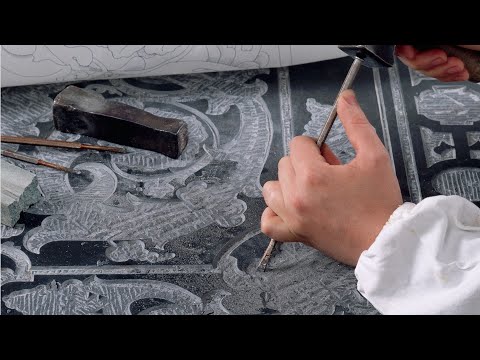
The job starts with examining a sketch, diagram, sample, or blueprint to work out exactly how a design should be etched, cut, or engraved onto a piece, whether that's a metal plate, a circuit, or a silk screen. Finished work gets inspected closely under calibrated microscopes, gauges, or magnifying lenses to check the depth and uniformity of the etching and catch any defects, then cleaned and polished before it ships out. The pace is often fast with real deadlines, and precision matters enormously since a flawed etch can ruin a piece. Most workers enter with a high school diploma and some on-the-job training or apprenticeship, and pay ranges from about $32,000 to $63,000.
Pros
- Skilled, detail-oriented craft work translating designs onto metal, wood, or other materials by hand
- Nearly flat outlook (-0.7%) compared to steeper declines seen elsewhere in production trades
- Meaningful independent judgment interpreting sketches and blueprints rather than rote repetition
Cons
- Very small job market of about 900 positions nationwide, one of the smallest in this batch
- Pay ceiling under $63,360 limits long-term earning growth
- Fast-paced, deadline-driven work where precision errors can ruin a finished piece
A typical day
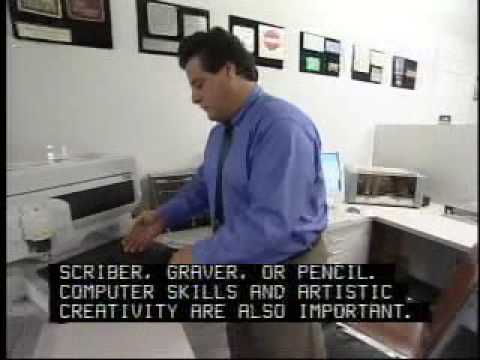
The bench is set by 7:30: today's first job is engraving serial numbers and a logo onto a run of surgical instruments, fixture checked twice because stainless forgives nothing. Mid-morning shifts to a laser engraver — programming a memorial plaque layout, running a test pass on scrap, then the real brass. After lunch comes handwork, the part machines still cannot do: touching up a hand-cut monogram on a watch case under a microscope, burin strokes a fraction of a millimeter deep. The day ends inspecting finished pieces with a loupe and logging each job, because every cut here is permanent.
Tasks at the job
- Inspect etched work for depth of etching, uniformity, and defects, using calibrated microscopes, gauges, fingers, or magnifying lenses.
- Examine sketches, diagrams, samples, blueprints, or photographs to decide how designs are to be etched, cut, or engraved onto workpieces.
- Clean and polish engraved areas.
Workplace & working conditions
Work happens indoors in a climate-controlled setting. Noise levels can be distracting or uncomfortable. The role involves regular exposure to contaminants, and standard protective equipment (gloves, safety glasses, and similar) is expected.
The pace is often fast, with real time pressure to meet deadlines, and you're expected to exercise significant independent judgment day to day. Precision and accuracy are essential to the work.
Education necessary or common
High school diploma; some on-the-job training or apprenticeship
Licenses & certifications
- OSHA 10
- Laser equipment operation certificates (manufacturer or employer training)
Career path
Related fields
Courses to take
- Art (drawing) — engraving is drawing with a cutting edge
- Metals or Jewelry shop class — direct material experience
- Geometry — layout, spacing, and lettering are geometric work
- Drafting/CAD — modern engraving runs through design software
- Chemistry — etching baths and metal finishes
Clubs, activities & competitions
- Art club with a printmaking or metals focus
- SkillsUSA — precision machining and related events
- A hand-lettering or calligraphy practice — the eye transfers directly
- Sell a small line of engraved or etched pieces at a craft fair
First steps you can take now
- Buy an inexpensive engraving practice kit and cut letters into scrap metal weekly
- Learn a vector design program (Inkscape is free) — laser engraving speaks vector
- Visit a trophy shop or jewelry engraver and ask to watch a job run
- Take the best art and shop classes your school offers next term