Photo: Calistemon (CC BY-SA 4.0)
Job description
Before any digging starts, a mining engineer studies maps, drilling data, and site surveys to judge a deposit's size, accessibility, and value, then designs the equipment, labor plan, and extraction method that will get the minerals out safely and economically. Many split their time between office planning and site visits, inspecting mines for unsafe structures or conditions and writing technical reports for management. Engineers with more experience often supervise technicians and other mine staff, or specialize in mine safety, designing and running the safety programs a site depends on.
Pros
- High upside earning potential, up to $170k
- Significant independent judgment and planning responsibility, from mine layout to extraction methods
- Leadership component supervising and training technicians and other mine personnel
Cons
- Above-average hours (40-50/week), common in mining operations
- Slower than average projected job growth (0.7% over the next decade)
- Only about 400 positions nationwide, one of the smallest job pools in engineering
A typical day
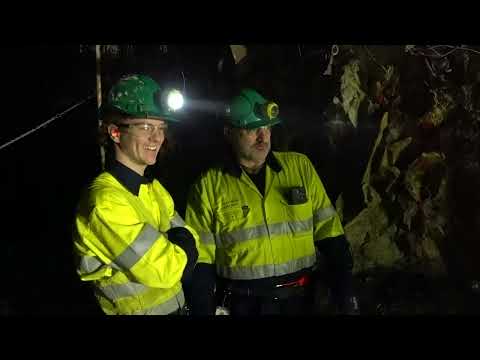
The week splits between site and office, and today is site: by 7am the engineer is underground in a hard hat and self-rescuer, inspecting a new heading with the shift supervisor and checking ground support against the plan. Late morning is spent at the vent survey — measuring airflow because underground, air is infrastructure. Back on the surface after lunch, the office half begins: updating the block model with new drill results, running slope-stability software on a pit wall, and reviewing a contractor's blast plan. The day ends drafting part of a permit application, since a modern mine is engineered on paper long before the first cut.
Tasks at the job
- Prepare technical reports for use by mining, engineering, and management personnel.
- Inspect mining areas for unsafe structures, equipment, and working conditions.
- Select or develop mineral location, extraction, and production methods, based on factors such as safety, cost, and deposit characteristics.
- Select locations and plan underground or surface mining operations, specifying processes, labor usage, and equipment that will result in safe, economical, and environmentally sound extraction of minerals and ores.
- Supervise, train, and evaluate technicians, technologists, survey personnel, engineers, scientists or other mine personnel.
- Examine maps, deposits, drilling locations, or mines to determine the location, size, accessibility, contents, value, and potential profitability of mineral, oil, and gas deposits.
Workplace & working conditions
Work happens indoors in a climate-controlled setting. Noise levels can be distracting or uncomfortable. The role involves regular exposure to hazardous equipment or conditions and contaminants, and standard protective equipment (gloves, safety glasses, and similar) is expected.
There's a regular, moderate amount of time pressure, and you're expected to exercise significant independent judgment day to day.
Education necessary or common
Bachelor's degree
Common college majors
Licenses & certifications
- Fundamentals of Engineering (FE) exam
- Professional Engineer (PE) license (career milestone)
- MSHA new-miner training (job-site requirement)
Career path
Related fields
Courses to take
- AP Physics — rock mechanics, ventilation, and blasting are physics problems
- AP Calculus — the engineering-school gateway
- AP Chemistry — mineral processing and geochemistry
- AP Environmental Science — permitting and reclamation shape every modern mine
- Geology or Earth Science — the orebody is the whole point
Clubs, activities & competitions
- Science Olympiad — Rocks and Minerals, Dynamic Planet events
- Rock and mineral collecting club, or start one
- FIRST Robotics — engineering design practice
- Model UN or debate — mining engineers spend real time defending projects publicly
First steps you can take now
- Visit a mine tour (many operating and historic mines run them) and ask the guide about engineering roles
- Start a mineral collection and learn to identify twenty ore minerals
- Look up ABET-accredited mining engineering programs — there are only about a dozen in the US, and scholarships are unusually generous
- Interview someone in the industry via the Society for Mining, Metallurgy and Exploration (SME) student outreach