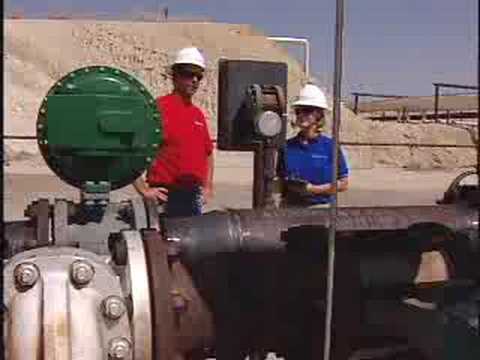
Photo: National Institute for Occupational Safety and Health (Public domain)
Job description
Petroleum engineers analyze production data to recommend where new wells should go and what processes might boost output, and they specify and supervise well modification and stimulation programs aimed at maximizing recovery. On the ground, they direct and monitor well completion, testing, and surveys, and they're often the ones field staff turn to when something isn't working as planned. The job is largely desk-based but team-oriented, following structured procedures with moderate, steady time pressure rather than constant crisis.
Pros
- Pay reaches up to $253k, with strong pay even at the entry level
- Team-based work directly improving oil and gas recovery methods
- Structured, procedure-driven role with clear production and drilling objectives
Cons
- Above-average hours are common, often exceeding a standard 40-hour work week
- Slower than average projected job growth limits long-term hiring expansion
- A small number of positions nationwide (1,200) concentrates jobs in specific regions
A typical day
The morning's production meeting reviews overnight numbers from forty wells, and one is underperforming its forecast — the engineer pulls its pressure data and spends the next two hours on diagnosis: decline-curve analysis says the reservoir is fine, so the problem is likely downhole, and a workover gets scoped and costed. Midday brings the design work the discipline is famous for: a new horizontal well's completion plan, frac stages spaced against the geology the geologists mapped, water and sand logistics booked against a budget measured in millions. A field visit fills the afternoon — hard hat and flame-resistant coveralls at the pad, watching a frac crew work and talking with the company man about what the pressure charts showed at stage twelve. Back at the office, an economics run: at current prices, does the next pad clear the hurdle rate? The spreadsheet says barely; the recommendation memo says wait. Energy transition pressure is real and the engineers feel it — which is why several of today's tools also get aimed at geothermal and carbon-storage projects in the company's portfolio.
Tasks at the job
- Specify and supervise well modification and stimulation programs to maximize oil and gas recovery.
- Monitor production rates, and plan rework processes to improve production.
- Maintain records of drilling and production operations.
- Analyze data to recommend placement of wells and supplementary processes to enhance production.
- Assist engineering and other personnel to solve operating problems.
- Direct and monitor the completion and evaluation of wells, well testing, or well surveys.
Workplace & working conditions
Work happens indoors in a climate-controlled setting, and most of the day is spent sitting at a desk.
There's a regular, moderate amount of time pressure. The work is highly structured, following set procedures. Almost all of the work is done as part of a team.
Education necessary or common
Bachelor's degree
Common college majors
Licenses & certifications
- Fundamentals of Engineering (FE) exam
- Professional Engineer (PE) license (career step)
Career path
Related fields
Courses to take
- AP Physics — fluid flow and pressure are the reservoir's language
- AP Calculus BC — the engineering foundation
- AP Chemistry — hydrocarbons, phase behavior, and treatment fluids
- Earth Science or Geology — reservoirs are rocks first
- AP Economics — project economics decide what gets drilled
Clubs, activities & competitions
- Science Olympiad — physics and earth science events
- FIRST Robotics — engineering practice
- Energy debate or research projects — know the industry's context honestly
- Math team
First steps you can take now
- Read how hydraulic fracturing and horizontal drilling actually work, from technical sources rather than advocacy in either direction
- Tour an oil field or energy museum if your region offers it
- Compare petroleum engineering programs and note which have expanded into geothermal and carbon storage — the degree's future flexibility matters
- Interview an engineer in the field about boom-bust cycles and how they've navigated them