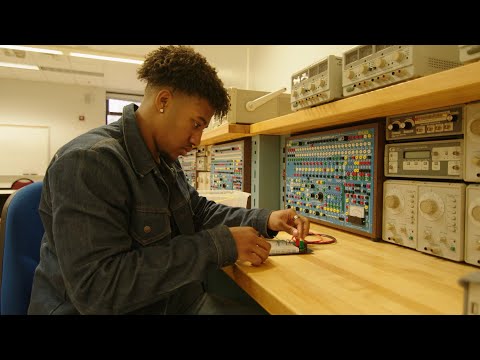
Photo: IAEA Imagebank (CC BY 2.0)
Job description
When an alarm or an abnormal reading comes in, technicians respond immediately, running radiation surveys and sample analysis to figure out what's contaminated and what decontamination steps are needed, then instructing other staff on the right safety procedures. Because the job exists to protect people and facilities from radiation exposure, precision in both testing and documentation isn't optional. The role sits within the nuclear power and defense sectors, which have been shrinking, so technicians tend to build deep specialization but should expect a tighter, more competitive job market than most technical fields. It typically requires vocational training or an associate's degree, with pay in the $73,000 to $133,600 range.
Pros
- Strong pay even at the entry level, with a floor well above $73k
- Enters via vocational training, apprenticeship, or an associate's degree, no bachelor's required
- Work directly protects public and worker safety, giving the role clear real-world stakes
Cons
- Employment in this field is projected to shrink over the next decade (-7.7%)
- Above-average hours, expect more than a standard 40-hour work week
- A relatively small number of positions nationwide, so opportunities may be geographically limited
A typical day
The shift starts by donning dosimetry — the badge that records the technician's own exposure — and reviewing overnight radiation-monitor readings across the facility. The morning route is sampling: wiping surfaces in controlled areas for contamination smears, collecting air filters and water samples, and running each through counters back at the lab where the numbers either confirm normalcy or start a very different day. Today one smear reads above the limit, so the tech cordons the area, resurveys with a hand meter to map the contamination's edges, and supervises the cleanup until the recount comes back clean. The afternoon covers instrument calibration — meters are only as honest as their last calibration — plus escorting maintenance workers into a radiation area with survey coverage, and the meticulous logkeeping that regulators will someday read.
Tasks at the job
- Analyze samples, such as air or water samples, for contaminants or other elements.
- Prepare reports describing contamination tests, material or equipment decontaminated, or methods used in decontamination processes.
- Provide initial response to abnormal events or to alarms from radiation monitoring equipment.
- Determine or recommend radioactive decontamination procedures, according to the size and nature of equipment and the degree of contamination.
- Determine intensities and types of radiation in work areas, equipment, or materials, using radiation detectors or other instruments.
- Instruct personnel in radiation safety procedures and demonstrate use of protective clothing and equipment.
Workplace & working conditions
Work happens indoors in a climate-controlled setting, and you work in close physical proximity to coworkers or the public for much of the shift. Noise levels can be distracting or uncomfortable. The role involves regular exposure to hazardous equipment or conditions and contaminants and working at heights, and specialized protective equipment is standard.
There's a regular, moderate amount of time pressure. Precision and accuracy are essential to the work. You'll regularly deal with frustrated or upset people as part of the job, and almost all of the work is done as part of a team.
Education necessary or common
Vocational training, apprenticeship, or associate's degree
Common college majors
Licenses & certifications
- NRRPT registration (career credential)
- OSHA 10
- Radiation worker training (employer-provided)
Career path
Related fields
Courses to take
- AP Physics — radiation types, shielding, and detection
- AP Chemistry — contamination behavior and sample analysis
- Algebra II — decay calculations and unit conversions
- AP Environmental Science — monitoring and sampling methodology
- Health — radiation biology basics
Clubs, activities & competitions
- Science Olympiad — physics and chemistry lab events
- Science Bowl — DOE-sponsored competition with energy science
- Amateur radio or electronics club — instrument fluency
- Any lab-assistant role with your school's science department
First steps you can take now
- Learn the units of radiation (rem, sievert, becquerel) and what everyday background exposure actually is
- Watch a health-physics survey demonstration video to see the real workflow
- Look up radiation protection technology associate's programs and utility hiring pipelines
- Ask a nuclear plant or hospital radiation safety office about entry-level technician paths