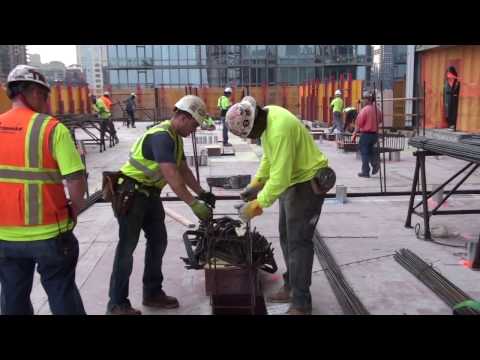
Photo: Habib M'henni (CC BY 4.0)
Job description
Workers read blueprints to figure out the size, shape, and placement of reinforcing rods needed, then cut them to length with tools like metal shears or acetylene torches and fasten them into forms with wire and pliers. On a floor job, they place blocks under the rebar to hold it off the deck at the right height before concrete gets poured. Known informally as rod busters, they work outdoors in all weather, often at height and around heavy equipment, on a schedule where deadlines move fast.
Pros
- Pay can top $104k at the high end with just a high school diploma and apprenticeship
- Faster than average projected growth (4.6%) despite being a small specialty trade
- Physically active, technically precise work reading blueprints and structural specs
Cons
- Only about 1,500 positions nationwide, a small and geographically limited niche
- Physically demanding outdoor work cutting and positioning heavy steel bars on your feet
- Deadline-driven pace paired with regular exposure to hazardous equipment and heights
A typical day
The deck pour is Thursday, so today the crew ties steel: by 7am the rodbusters are reading placement drawings and laying out bottom mat bars on the bridge deck, spacing checked against the engineer's plan because concrete hides everything and forgives nothing. The morning is rhythm work — bend, place, tie, the pigtail spinning wire knots at a pace that makes veterans' hands famous — with hooks, chairs, and splices going in where the drawings call. Midday heat means water and watching each other. The afternoon brings the inspector's walk before sign-off, a few corrections, and prepping column cages for tomorrow, bent on-site with the hydraulic bender. It's among the most physical of the trades, and it builds everything that stands.
Tasks at the job
- Determine quantities, sizes, shapes, and locations of reinforcing rods from blueprints, sketches, or oral instructions.
- Space and fasten together rods in forms according to blueprints, using wire and pliers.
- Cut rods to required lengths, using metal shears, hacksaws, bar cutters, or acetylene torches.
- Position and secure steel bars, rods, cables, or mesh in concrete forms, using fasteners, rod-bending machines, blowtorches, or hand tools.
- Place blocks under rebar to hold the bars off the deck when reinforcing floors.
- Cut and fit wire mesh or fabric, using hooked rods, and position fabric or mesh in concrete to reinforce concrete.
Workplace & working conditions
Work happens primarily outdoors, exposed to whatever the weather is doing, and most of the day is spent on your feet, and you work in close physical proximity to coworkers or the public for much of the shift. Noise levels can be distracting or uncomfortable. The role involves regular exposure to hazardous equipment or conditions and contaminants and working at heights, and specialized protective equipment is standard.
The pace is often fast, with real time pressure to meet deadlines.
Education necessary or common
High school diploma; some on-the-job training or apprenticeship
Licenses & certifications
- Ironworker apprenticeship completion
- OSHA 10 Construction
- AWS welding certification (for welded connections)
Career path
Related fields
Courses to take
- Geometry — reading placement drawings and layout
- Algebra — bar counts, spacing, and lap lengths
- Shop/Welding — direct trade preparation
- Physical Education — the job demands real strength and endurance
- Drafting — blueprint literacy
Clubs, activities & competitions
- SkillsUSA
- Weightlifting or football — the physical base
- A construction laborer summer job
- Habitat for Humanity builds
First steps you can take now
- Get OSHA 10 Construction online
- Apply to the Ironworkers union apprenticeship at 18 — earn while you learn
- Practice tying rebar knots — videos plus wire and two bars from a hardware store
- Ask a concrete contractor about summer laborer work