Photo: U.S. Air Force photo by Senior Airman Brooke Keisler (Public domain)
Job description
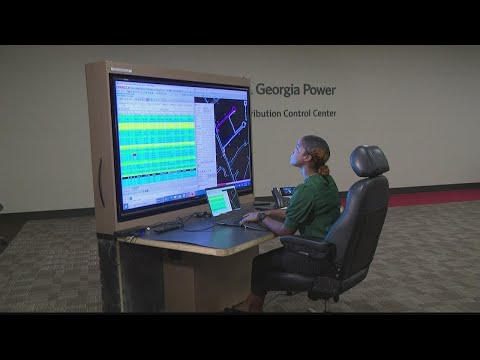
The job blends routine monitoring with high-stakes emergency response: watching data on circuits and connections during normal operation, then stepping in immediately to reroute current around a failed transformer or transmission line when something breaks. Dispatchers coordinate closely with field engineers and control room operators, directing them to start boilers or generators and keeping outages contained until service is restored. Because mistakes can cause widespread outages or safety hazards, the role typically requires years of on-the-job training and certification before someone dispatches independently.
Pros
- High upside earning potential, with top pay reaching $154k
- Strong pay even at the entry level, well above most roles requiring only an associate's degree
- Critical, high-responsibility work directing how power flows across the grid
Cons
- Employment in this field is projected to shrink over the next decade (-3.2%)
- A relatively small number of positions nationwide (around 800) makes this a competitive, limited field
- Mistakes can have serious consequences, adding real pressure especially during emergency response
A typical day
A dispatcher's shift begins with a formal turnover briefing: which lines are out for maintenance, which crews are in the field, what weather is coming. The control center wall is a live map of the grid, and the morning means monitoring load as the region wakes up, coordinating planned switching so a crew can work a de-energized line safely. When a fault trips a transmission line mid-afternoon, the room sharpens: reroute power, verify what protective relays did, dispatch crews, and keep voltage stable — in minutes, not hours. Every switching order is scripted, repeated back, and logged, because a wrong step can kill a lineworker or black out a city.
Tasks at the job
- Coordinate with engineers, planners, field personnel, or other utility workers to provide information such as clearances, switching orders, or distribution process changes.
- Respond to emergencies, such as transformer or transmission line failures, and route current around affected areas.
- Control, monitor, or operate equipment that regulates or distributes electricity or steam, using data obtained from instruments or computers.
- Direct personnel engaged in controlling or operating distribution equipment or machinery, such as instructing control room operators to start boilers or generators.
- Distribute or regulate the flow of power between entities, such as generating stations, substations, distribution lines, or users, keeping track of the status of circuits or connections.
- Manipulate controls to adjust or activate power distribution equipment or machines.
Workplace & working conditions
Work happens indoors in a climate-controlled setting. Noise levels can be distracting or uncomfortable. The role involves regular exposure to working at heights.
There's a regular, moderate amount of time pressure, and you're expected to exercise significant independent judgment day to day. Mistakes can have serious consequences, so accuracy matters a lot, and the work is highly structured, following set procedures.
Education necessary or common
Vocational training, apprenticeship, or associate's degree
Licenses & certifications
- NERC System Operator certification
- OSHA 10 General Industry
Career path
Related fields
Courses to take
- Physics — electricity is the entire job; take it seriously
- Algebra II/Pre-Calculus — load, voltage, and power calculations
- Computer Applications — SCADA systems are the working environment
- Geography — grid topology is spatial thinking
- English — precise verbal communication is a life-safety skill here
Clubs, activities & competitions
- Amateur (ham) radio club — real electrical and communications grounding
- Robotics club — systems and controls thinking
- Esports or chess — sustained focus and decision-making under pressure, genuinely relevant
First steps you can take now
- Watch a video on how the power grid works end to end, then explain it to someone
- Ask your local utility about control-room tours or job shadows
- Look up NERC certification — the credential that gates system operator jobs
- Consider an associate's in electrical technology; many utilities recruit from them