Photo: NASA Hubble (CC BY 2.0)
Job description
Much of the job is signal quality control: watching monitors, checking transmitter readings, and adjusting equipment the moment audio or video starts to drift so a broadcast stays clear. Technicians also keep the programming logs required by station management and the FCC, and preview upcoming segments ahead of time to make sure everything is cued up and ready before it airs live. Behind the scenes, they set up and maintain the station's computers and networks that everything else depends on. It's collaborative work, done in close coordination with on-air staff and producers, in an environment where equipment noise is a constant backdrop.
Pros
- Entry via vocational training or an associate's degree, no four-year degree required
- Steady indoor, climate-controlled desk work as part of a regular station team
- Upside pay can reach $124k for experienced technicians at larger stations
Cons
- Field is projected to shrink over the next decade (-2.8%)
- Only about 1,800 jobs nationwide, so openings are geographically limited
- Constant monitoring of signals and FCC-required logs leaves little room for lapses in attention
A typical day
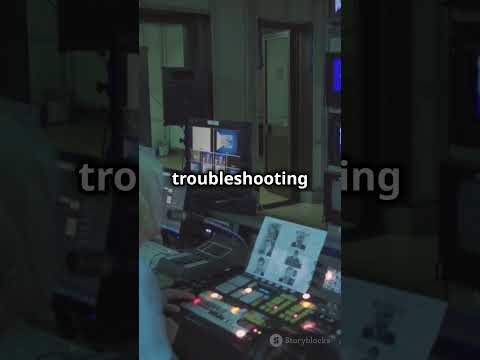
Sign-on checks start the morning at the TV station: transmitter readings logged, satellite feeds confirmed, the control room's switcher and audio board tested before the noon newscast owns the building. Setup for the show is precise routine — mics on anchors, graphics loaded, prompter checked — and then the technician directs signal traffic live: rolling packages, keying lower-thirds, riding audio levels while the producer counts down segments in everyone's headsets. A live shot from a reporter's truck drops mid-hookup and gets rebuilt in ninety seconds via bonded cellular. The afternoon belongs to maintenance: a studio camera's back-focus adjusted, cable runs certified, a transmitter site visit scheduled ahead of storm season. When the equipment works, nobody notices — which is the job's definition of success.
Tasks at the job
- Monitor and log transmitter readings.
- Maintain programming logs as required by station management and the Federal Communications Commission.
- Monitor strength, clarity, and reliability of incoming and outgoing signals, and adjust equipment as necessary to maintain quality broadcasts.
- Observe monitors and converse with station personnel to determine audio and video levels and to ascertain that programs are airing.
- Preview scheduled programs to ensure that signals are functioning and programs are ready for transmission.
- Set up, operate, and maintain broadcast station computers and networks.
Workplace & working conditions
Work happens indoors in a climate-controlled setting, and most of the day is spent sitting at a desk. Noise levels can be distracting or uncomfortable.
There's a regular, moderate amount of time pressure. Almost all of the work is done as part of a team.
Education necessary or common
Vocational training, apprenticeship, or associate's degree
Common college majors
Licenses & certifications
- SBE certifications (Society of Broadcast Engineers — the field's ladder)
- Amateur radio license (foundational)
- Dante/AV networking certificates
Career path
Related fields
Courses to take
- Electronics — the trade's technical spine
- Physics — RF, signal, and audio all obey it
- Video Production / broadcast courses
- AP Computer Science Principles — broadcast plants are IP networks now
- Math through Algebra II
Clubs, activities & competitions
- School broadcast/announcements crew
- Theater tech — live production reflexes
- Amateur radio club — RF knowledge is rare and valued
- Livestream school sports
First steps you can take now
- Learn OBS deeply and direct a multi-camera livestream of a school event
- Get an amateur radio license — real RF credentials as a teenager
- Tour a local TV or radio station and ask the engineer, not the anchor, for ten minutes
- Build and troubleshoot audio/video cable connections until signal flow is second nature