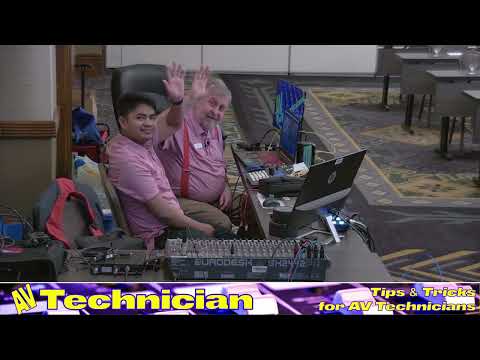
Photo: JohnRH4 (CC BY-SA 2.0)
Job description
On a typical job, technicians arrive early to set up and test equipment, then run it live during the event itself, switching camera or audio sources, adjusting lighting and sound levels, and troubleshooting problems in real time while coordinating with assistants and other production staff. Afterward, they compress, digitize, and archive the recorded footage or audio and flag anything that needs repair before the next gig. The scale varies enormously, from one technician handling a small conference alone to a full crew running lights, sound, and multi-camera video for a televised sporting event or concert.
Pros
- Faster than average projected job growth at 3.3% over the next decade
- Accessible entry point via vocational training or an associate's degree rather than a four-year degree
- Hands-on technical variety, from live event production to studio recording and equipment maintenance
Cons
- Precision and accuracy are essential, since a live broadcast or event leaves no room for on-the-fly fixes
- Pay tops out around $101k, with lower entry-level wages typical for the vocational-level barrier to entry
- Live events mean work often runs on the event's schedule rather than a predictable 9-to-5
A typical day
Load-in at 8 for a corporate conference: pushing road cases up a loading dock, then hours of methodical setup — projectors aligned and blended, microphones checked channel by channel, video switcher programmed, every cable path taped and labeled because troubleshooting mid-show means finding one cord among two hundred. Doors open and the tech disappears into competence: mixing the CEO's lavalier, rolling videos on cue, catching the presenter who wanders off their mark with a followspot. A hotel ballroom today; a school auditorium or livestream studio tomorrow. Strike and load-out end the night — the gear leaves in better order than it arrived, because tomorrow it does this again.
Tasks at the job
- Notify supervisors when major equipment repairs are needed.
- Install, adjust, and operate electronic equipment to record, edit, and transmit radio and television programs, motion pictures, video conferencing, or multimedia presentations.
- Direct and coordinate activities of assistants and other personnel during production.
- Compress, digitize, duplicate, and store audio and video data.
- Control the lights and sound of events, such as live concerts, before and after performances, and during intermissions.
- Switch sources of video input from one camera or studio to another, from film to live programming, or from network to local programming.
Workplace & working conditions
Work happens indoors in a climate-controlled setting.
There's a regular, moderate amount of time pressure, and you're expected to exercise significant independent judgment day to day. Precision and accuracy are essential to the work. Almost all of the work is done as part of a team.
Education necessary or common
Vocational training, apprenticeship, or associate's degree
Common college majors
Licenses & certifications
- AVIXA CTS (the industry's core certification)
- Dante audio-networking certification (free online levels)
- OSHA 10 (event/rigging environments)
Career path
Related fields
Courses to take
- Theater tech / stagecraft — the direct pipeline
- Physics — sound, light, and signal are physics in work clothes
- AP Computer Science Principles — modern AV is networked
- Music or Music Theory — trained ears mix better
- Video Production
Clubs, activities & competitions
- School theater tech crew — run sound and lights for every production
- Morning announcements / broadcast club
- Church, community theater, or venue volunteering on AV
- Livestream school sports or events
First steps you can take now
- Volunteer for tech crew on the next school production and learn the sound board hands-on
- Learn signal flow: draw the path from microphone to speaker for any system you can access
- Watch a professional load-in if a local venue allows observers
- Learn OBS (free) and produce one clean livestream