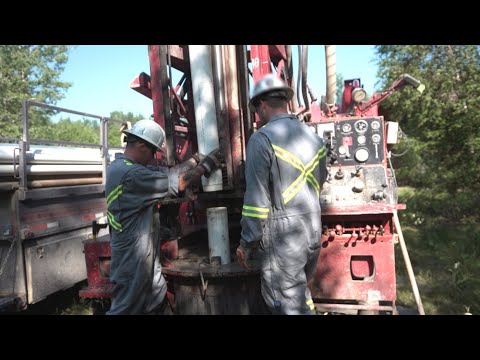
Photo: Olga Ernst (CC BY-SA 4.0)
Job description
Getting the rig into position is its own task before drilling even starts: guiding truck-mounted equipment to the right spot, then leveling and stabilizing it and extending a telescoping derrick if the job calls for it. Once drilling begins, operators constantly adjust air pressure, rotary speed, and downward force to match whatever rock or material they're cutting through, adding drill rods and swapping bits as the hole gets deeper. Depending on the project, the goal might be reaching groundwater or salt deposits, pulling core samples for mineral exploration, or prepping a hole for explosives used in mining or construction. The work happens outdoors regardless of weather, involves real exposure to noise and heavy equipment, and is typically learned through on-the-job training.
Pros
- Pay ceiling near $84k with only a high school diploma and on-the-job training required
- Faster than average projected job growth (2.9% over the next decade)
- High day-to-day autonomy operating and adjusting equipment with significant independent judgment
Cons
- Above-average hours, often exceeding a standard 40-hour work week
- A relatively small number of positions nationwide limits where the work is available
- Outdoor work exposed to weather, noise, and heights around heavy drilling equipment
A typical day
The water-well rig sets up at a rural property by 7:30: mast raised, leveled, and the first joint of drill rod spinning by 8. The driller reads the ground through the machine — air pressure, rotation speed, and down-pressure adjusted as the bit moves from clay into fractured granite, cuttings examined at intervals because they're the only window into what's below. Rod gets added joint by joint as the hole deepens; at 180 feet the airlift surges and the water arrives, to the homeowner's visible relief. Casing follows, sealed to protect the aquifer. Other days run different missions with the same instincts: geotechnical cores pulled clean for an engineering firm, blast holes patterned across a quarry bench. The rig gets greased and the log gets written — depth, formations, yield — because the driller's log is the well's birth certificate.
Tasks at the job
- Operate controls to stabilize machines and to position and align drills.
- Start, stop, and control drilling speed of machines and insertion of casings into holes.
- Regulate air pressure, rotary speed, and downward pressure, according to the type of rock or concrete being drilled.
- Select and attach drill bits and drill rods, adding more rods as hole depths increase, and changing drill bits as needed.
- Drive or guide truck-mounted equipment into position, level and stabilize rigs, and extend telescoping derricks.
- Operate machines to flush earth cuttings or to blow dust from holes.
Workplace & working conditions
Work happens primarily outdoors, exposed to whatever the weather is doing, and most of the day is spent on your feet. Noise levels can be distracting or uncomfortable. The role involves regular exposure to hazardous equipment or conditions and contaminants and working at heights, and standard protective equipment (gloves, safety glasses, and similar) is expected.
You're expected to exercise significant independent judgment day to day.
Education necessary or common
High school diploma; some on-the-job training or apprenticeship
Licenses & certifications
- State water well driller license (after apprenticeship)
- OSHA 10
- CDL (rigs travel on it)
Career path
Related fields
Courses to take
- Earth Science/Geology — you drill through what these courses teach
- Physics — pressure, rotation, and hydraulics
- Shop/Mechanics — rigs demand constant mechanical care
- Algebra — depths, volumes, and pressure math
- Chemistry — groundwater and grouting basics
Clubs, activities & competitions
- SkillsUSA heavy equipment tracks
- Farm or construction equipment experience
- Science Olympiad earth science events
- Rock and mineral collecting — formation literacy starts as a hobby
First steps you can take now
- Learn your local geology — what's actually under your county
- Get OSHA 10 certified
- Ask a water-well company about helper positions — the trade trains from the ground up
- Watch drilling videos and learn rotary versus cable-tool methods