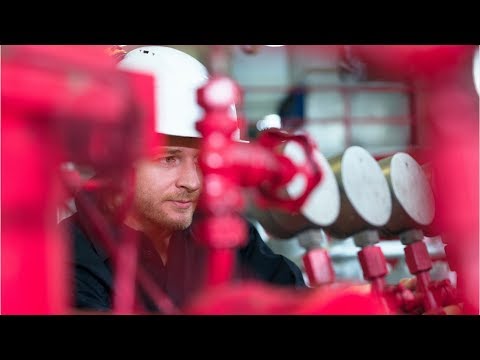
Photo: Macabe5387 (CC BY-SA 4.0)
Job description
Technicians working at power facilities monitor and adjust plant equipment, collect operating data, and keep detailed logs and reports of the work performed. Those focused on residential and commercial systems install, test, and maintain geothermal heat pumps, running pressure and flow tests on the underground loop piping and figuring out whether a property needs backup heating or cooling systems for extreme weather. Much of the work happens inside vehicles or equipment cabins near hazardous machinery, so specialized protective gear is standard, and the job leans on independent judgment to keep systems running safely.
Pros
- Large job market with 21,500 positions nationwide and positive projected growth
- Low barrier to entry: just a high school diploma and on-the-job training or apprenticeship
- Work in the renewable geothermal energy sector, both at power plants and residential installations
Cons
- Pay ceiling is modest relative to other energy trades, topping out near $77k
- Exposure to hazardous equipment and heights requires specialized protective equipment
- Above-average hours, often exceeding a standard 40-hour work week
A typical day
The residential crew's morning is a ground-loop installation: the technician fuses HDPE pipe joints with a heat plate — each weld logged — as the loop field goes into trenches beside a new house, then pressure-tests the whole circuit before backfill hides it forever. The afternoon is the mechanical room: heat pump set, loop connected, antifreeze charged, and the system commissioned with flow and temperature-delta readings recorded against spec. Utility-scale days run differently — wellhead checks, brine system maintenance, turbine auxiliary rounds at a power plant. Either way the craft is the same bet: the earth's steady temperature, harnessed by someone who installs it right the first time.
Tasks at the job
- Monitor and adjust operations of geothermal power plant equipment or systems.
- Prepare and maintain logs, reports, or other documentation of work performed.
- Collect and record data associated with operating geothermal power plants or well fields.
- Determine whether emergency or auxiliary systems will be needed to keep properties heated or cooled in extreme weather conditions.
- Perform pre- and post-installation pressure, flow, and related tests of vertical and horizontal geothermal loop piping.
- Identify equipment options, such as compressors, and make appropriate selections.
Workplace & working conditions
Work happens mostly inside a vehicle or piece of equipment. Noise levels can be distracting or uncomfortable. The role involves regular exposure to hazardous equipment or conditions and contaminants and working at heights, and specialized protective equipment is standard.
There's a regular, moderate amount of time pressure, and you're expected to exercise significant independent judgment day to day.
Education necessary or common
High school diploma; some on-the-job training or apprenticeship
Licenses & certifications
- EPA 608 (refrigerant handling, required)
- IGSHPA accredited installer certification (the geothermal-specific credential)
- HVAC certifications (NATE)
- OSHA 10
Career path
Related fields
Courses to take
- Physics — heat transfer is the entire technology
- HVAC or Construction shop classes — the direct trade pathway
- Chemistry — antifreeze solutions and brine systems
- Algebra II — loop sizing and flow math
- Earth Science — ground temperatures and geology
Clubs, activities & competitions
- SkillsUSA HVAC competitions
- Robotics or maker club
- A summer job with an HVAC, plumbing, or drilling contractor
- Science fair with a heat transfer experiment
First steps you can take now
- Learn how a heat pump moves heat (free HVAC intro videos) and explain it to someone
- Visit a community college HVAC program — geothermal rides on that trade
- Ask a geothermal installer to see a loop field installation
- Get comfortable with hand and power tools now