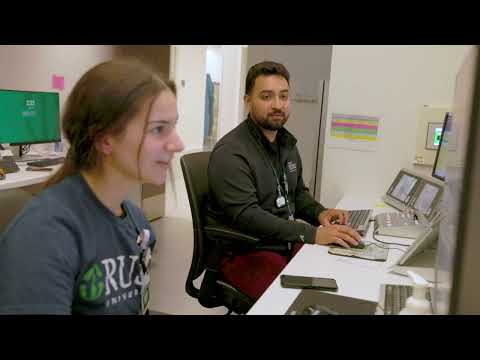
Photo: Chris Sam (CC BY-SA 4.0)
Job description
Much of the job is precision work: positioning a patient exactly as prescribed, entering data to set the equipment's controls, and administering the correct radiation dose to a specific part of the body. Therapists also check that equipment is functioning properly before each session and often run treatment sessions independently once the overall plan is set by the physician. Beyond the technical side, there's a real human component: answering patients' and families' questions, offering reassurance, and reinforcing the physician's guidance about treatment reactions or aftercare. Mistakes can have serious consequences, so the pace stays fast but accuracy always comes first.
Pros
- Strong pay from entry level onward, with a floor above $80k and top pay past $156k
- Entry via vocational training or an associate's degree rather than a four-year program
- Meaningful, direct patient impact, guiding people through cancer treatment with real independence in sessions
Cons
- Only about 900 positions nationwide, a very small field with limited geographic spread
- Slower than average projected growth compared to other healthcare occupations
- Mistakes have serious consequences, and the job regularly involves frightened or upset patients and families
A typical day
The linear accelerator gets its morning QA checks before any patient lies on the table — output verified, imaging aligned, safety interlocks tested. The day then runs on a schedule of 20-minute treatment slots: the therapist greets a patient by name (many come daily for weeks, so real relationships form), positions them precisely against tattooed alignment marks, verifies the setup with imaging, and delivers the prescribed dose from behind a shielded console, watching on camera the whole time. Between patients: charting, machine parameters double-checked against the physician's plan, and a first-day patient who needs the process explained gently. Precision and compassion, alternating by the minute.
Tasks at the job
- Position patients for treatment with accuracy, according to prescription.
- Administer prescribed doses of radiation to specific body parts, using radiation therapy equipment according to established practices and standards.
- Conduct most treatment sessions independently, in accordance with the long-term treatment plan and under the general direction of the patient's physician.
- Enter data into computer and set controls to operate or adjust equipment or regulate dosage.
- Check radiation therapy equipment to ensure proper operation.
- Educate, prepare, and reassure patients and their families by answering questions, providing physical assistance, and reinforcing physicians' advice regarding treatment reactions or post-treatment care.
Workplace & working conditions
Work happens indoors in a climate-controlled setting, and most of the day is spent walking or moving around, and you work in close physical proximity to coworkers or the public for much of the shift.
The pace is often fast, with real time pressure to meet deadlines, and you're expected to exercise significant independent judgment day to day. Mistakes can have serious consequences, so accuracy matters a lot. You'll regularly deal with frustrated or upset people as part of the job.
Education necessary or common
Vocational training, apprenticeship, or associate's degree
Licenses & certifications
- ARRT certification in Radiation Therapy
- State radiologic licensure
- CPR/BLS
Career path
Related fields
Courses to take
- Anatomy & Physiology — treatment fields are anatomy in practice
- AP Physics — radiation physics underlies every treatment
- AP Biology — cancer biology context
- Algebra II — dose and setup calculations
- Psychology — patients in cancer treatment need steadiness and warmth
Clubs, activities & competitions
- HOSA (Future Health Professionals)
- Hospital volunteering — oncology units where allowed
- Science Olympiad — anatomy or physics events
- Relay For Life or American Cancer Society volunteering
First steps you can take now
- Look up radiation therapy programs (associate's and bachelor's both exist) and their prerequisites
- Volunteer at a hospital and ask about observing in radiation oncology
- Get CPR certified
- Interview a radiation therapist — oncology departments often accommodate serious students