Photo: Staff Sgt. Benjamin Stratton (Public domain)
Job description
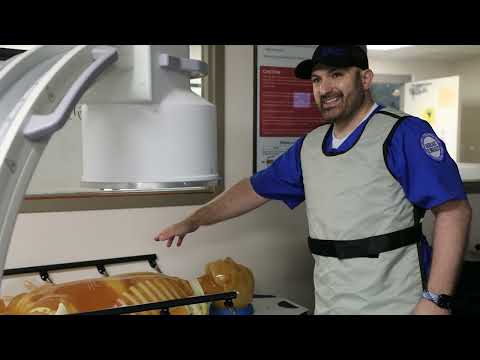
Technologists set exposure time, distance, and other controls based on the specific exam ordered, then review the resulting images to judge whether they're clear enough for a physician to diagnose from. Radiation safety is a constant concern, so proper protective measures and equipment are used on every patient. Some technologists also operate a fluoroscope to help a physician guide a catheter or wire through blood vessels in real time, which means the job can involve assisting directly in procedures, not just standalone imaging. Precision and accuracy carry real weight, since a poorly positioned or exposed image can mean an exam has to be repeated.
Pros
- Solid pay ($56k-$119k) reachable with vocational training or an associate's degree
- Faster than average job growth (4.3%) keeps demand for technicians healthy
- Hands-on diagnostic patient care without years of medical school
Cons
- Regular use of radiation-producing equipment requires strict safety protocols and protective gear
- Precision is essential, since a poorly positioned scan can mean redoing the exam
- Close physical proximity to patients all shift, including ones who are anxious or in pain
A typical day
The 7am shift starts in the ER queue: a possible wrist fracture from an overnight fall needs imaging, and the tech positions the patient's arm precisely — angle and technique determine whether the radiologist can even answer the question. Mid-morning rotates to fluoroscopy, assisting a physician through a live study, then portable x-rays up on the floors for patients too sick to travel, dodging IV lines and ventilator tubing to get a clean chest image. Every exam balances image quality against dose: collimate tight, shield what can be shielded. The afternoon brings a CT rotation, a combative patient who needs patience more than technique, and QC checks before handoff.
Tasks at the job
- Position imaging equipment and adjust controls to set exposure time and distance, according to specification of examination.
- Use radiation safety measures and protection devices to comply with government regulations and to ensure safety of patients and staff.
- Review and evaluate developed x-rays, video tape, or computer-generated information to determine if images are satisfactory for diagnostic purposes.
- Take thorough and accurate patient medical histories.
- Operate fluoroscope to aid physician to view and guide wire or catheter through blood vessels to area of interest.
- Set up examination rooms, ensuring that all necessary equipment is ready.
Workplace & working conditions
Work happens indoors in a climate-controlled setting, and you work in close physical proximity to coworkers or the public for much of the shift. Standard safety equipment like gloves or safety glasses is commonly worn.
There's a regular, moderate amount of time pressure, and you're expected to exercise significant independent judgment day to day. Precision and accuracy are essential to the work. You'll regularly deal with frustrated or upset people as part of the job, and almost all of the work is done as part of a team.
Education necessary or common
Vocational training, apprenticeship, or associate's degree
Licenses & certifications
- ARRT certification in Radiography
- State radiologic license
- CPR/BLS
- Later modality certs: CT, MRI, mammography
Career path
Related fields
Courses to take
- Anatomy & Physiology — positioning is applied anatomy
- AP Physics — radiation and imaging physics
- AP Biology — clinical foundation
- Algebra II — technique factors and dose math
- Psychology — patients are often scared and in pain
Clubs, activities & competitions
- HOSA (Future Health Professionals)
- Hospital volunteering
- Science Olympiad — anatomy events
- Sports medicine/athletic training student aide
First steps you can take now
- Look up JRCERT-accredited radiography programs near you and their prerequisites
- Volunteer at a hospital and ask to meet someone in imaging
- Get CPR/BLS certified
- Study basic skeletal anatomy with a free app until major landmarks are automatic