Photo: Cpl. Timothy Solano (Public domain)
Job description
Before a scan even starts, technologists screen patients for anything that could make an MRI dangerous, like pacemakers, metal implants, or pregnancy, since the machine's magnetic field can interact badly with certain objects and conditions. They choose the right imaging technique and coil for what a physician needs to see, position the patient carefully (sometimes administering a contrast dye first), and watch the images as they come in to make sure they're sharp enough to be useful. Because patients are often anxious in the machine's tight space and loud noise, technologists also spend real effort on comfort, offering headphones or earplugs and talking patients through what to expect.
Pros
- Faster than average projected job growth (7.1% over the next decade)
- Entry via vocational training or an associate's degree, not a four-year degree
- Direct patient care with a clear, specialized technical skill set
Cons
- Only about 2,600 positions nationwide, so openings are geographically limited
- Mistakes can have serious consequences, so screening patients for contraindications carries real responsibility
- Regularly dealing with anxious or uncomfortable patients, including those with claustrophobia or pain
A typical day
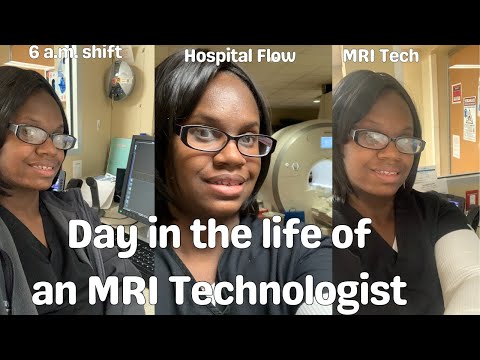
The first patient at 7am is a claustrophobic veteran needing a brain scan, and the technologist's skill shows before any imaging: screening every metal risk with a checklist that has zero tolerance (the magnet is always on, and a forgotten aneurysm clip or O2 tank becomes a projectile), then coaching the patient through breathing and offering the mirror trick that makes the bore feel open. Positioning is millimeter work — coils placed, landmarks set — then the console: pulse sequences selected and adjusted for the clinical question, artifacts recognized and corrected mid-exam. The morning runs a rhythm of spines, knees, and a cardiac study. After lunch, a contrast study requires IV placement and monitoring, and an emergency add-on — a possible cord compression — bumps the schedule, handled fast because the answer changes tonight's surgery decision. Images get checked for quality before each patient leaves the table; the radiologist reads them, but the technologist makes them worth reading.
Tasks at the job
- Review physicians' orders to confirm prescribed exams.
- Conduct screening interviews of patients to identify contraindications, such as ferrous objects, pregnancy, prosthetic heart valves, cardiac pacemakers, or tattoos.
- Select appropriate imaging techniques or coils to produce required images.
- Operate magnetic resonance imaging (MRI) scanners.
- Provide headphones or earplugs to patients to improve comfort and reduce unpleasant noise.
- Position patients on cradle, attaching immobilization devices, if needed, to ensure appropriate placement for imaging.
Workplace & working conditions
Work happens indoors in a climate-controlled setting, and you work in close physical proximity to coworkers or the public for much of the shift. Noise levels can be distracting or uncomfortable. Standard safety equipment like gloves or safety glasses is commonly worn.
There's a regular, moderate amount of time pressure, and you're expected to exercise significant independent judgment day to day. Mistakes can have serious consequences, so accuracy matters a lot. You'll regularly deal with frustrated or upset people as part of the job.
Education necessary or common
Vocational training, apprenticeship, or associate's degree
Licenses & certifications
- ARRT certification in Radiography, then MRI — the standard sequence
- Some enter MRI directly via ARMRIT-recognized programs
- State radiologic technologist license where required
- BLS/CPR
Career path
Related fields
Courses to take
- Anatomy and Physiology — cross-sectional anatomy is the daily language
- Physics — MRI is applied physics; magnetism and resonance are the machine
- AP Biology — the clinical foundation
- Algebra II — imaging parameters and their tradeoffs
- Health Science electives — patient care fundamentals
- AP Psychology — anxious patients need managing as much as machines
Clubs, activities & competitions
- HOSA — health careers events and exposure
- Hospital volunteering — ask for imaging department placement
- Science Olympiad — anatomy and physics events
- Red Cross club and CPR training
First steps you can take now
- Shadow in a hospital imaging department — radiology departments often welcome career-curious students
- Get CPR/BLS certified
- Look up ARRT-recognized radiography programs — most MRI techs certify in radiography first, then add MRI
- Learn basic cross-sectional anatomy from free resources — seeing the body in slices is the field's mental shift