Photo: Shixart1985 (CC BY 2.0)
Job description
Setting up a test means placing electrodes precisely and programming the right montage before recording begins, then watching the readout closely to flag artifacts caused by patient movement or a loose electrode rather than genuine brain activity. Technologists also monitor patients live during surgeries or overnight sleep studies, gather relevant medical history beforehand, and talk anxious patients through what to expect. The job moves at a fast pace with real deadlines and involves regular contact with distressed patients, all while working closely with a broader care team. It typically requires vocational training or an associate's degree, and demand is projected to grow faster than average.
Pros
- Faster than average projected growth (5.2%), with a solid occupation size (13,600 jobs)
- Vocational training or an associate's degree is enough to enter the field
- Direct, hands-on patient care using specialized diagnostic technology
Cons
- Pay tops out under $86k, a modest ceiling for the technical skill required
- Fast-paced work with real deadline pressure and exacting precision requirements
- Regular exposure to contaminants requiring specialized protective equipment
A typical day
The first patient at 8am is a routine EEG: twenty-plus electrodes measured and glued to precise scalp positions, impedances checked, and twenty minutes of brainwaves recorded while the tech annotates every blink, movement, and drowsy stretch that could masquerade as pathology. Mid-morning brings a bedside study in the ICU on a sedated patient, where careful electrode work happens around lines and monitors. After lunch there's an evoked-potential study — clicking sounds and checkerboard screens while measuring the nervous system's response times — and a long-term epilepsy-monitoring patient whose overnight record needs event-marking before the neurologist reads it. Between studies, electrodes get cleaned and supplies restocked. The tech sees the brain's electricity all day; the diagnosis belongs to the physician, but the quality of the data belongs entirely to the tech.
Tasks at the job
- Indicate artifacts or interferences derived from sources outside of the brain, such as poor electrode contact or patient movement, on electroneurodiagnostic recordings.
- Monitor patients during tests or surgeries, using electroencephalographs (EEG), evoked potential (EP) instruments, or video recording equipment.
- Conduct tests or studies such as electroencephalography (EEG), polysomnography (PSG), nerve conduction studies (NCS), electromyography (EMG), and intraoperative monitoring (IOM).
- Collect patients' medical information needed to customize tests.
- Explain testing procedures to patients, answering questions or reassuring patients, as needed.
- Set up, program, or record montages or electrical combinations when testing peripheral nerve, spinal cord, subcortical, or cortical responses.
Workplace & working conditions
Work happens indoors in a climate-controlled setting, and you work in close physical proximity to coworkers or the public for much of the shift. The role involves regular exposure to contaminants, and specialized protective equipment is standard.
The pace is often fast, with real time pressure to meet deadlines, and you're expected to exercise significant independent judgment day to day. Precision and accuracy are essential to the work. You'll regularly deal with frustrated or upset people as part of the job, and almost all of the work is done as part of a team.
Education necessary or common
Vocational training, apprenticeship, or associate's degree
Common college majors
Licenses & certifications
- Registered EEG Technologist (R. EEG T., ABRET)
- Registered Polysomnographic Technologist (RPSGT, for sleep studies)
- CPR/BLS
Career path
Related fields
Courses to take
- Anatomy and Physiology — the nervous system is the entire subject
- AP Biology — neurons, signaling, and the science beneath the squiggles
- Physics — electricity and signal behavior explain every artifact
- AP Psychology — brain-behavior connections and patient rapport
- Health Science CTE courses — clinical workflow and terminology
Clubs, activities & competitions
- HOSA-Future Health Professionals — clinical events and healthcare exposure
- Science Olympiad — Anatomy and Physiology (nervous system years especially)
- Hospital volunteering — comfort in clinical settings
- Brain Bee neuroscience competition if offered nearby
First steps you can take now
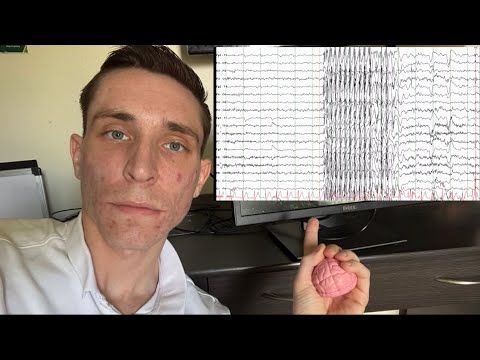
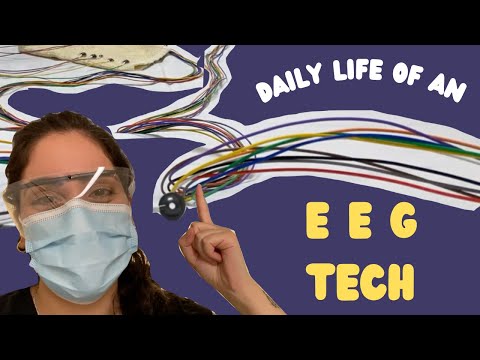
- Watch a full EEG setup video to see the hands-on craft of electrode placement
- Look up CAAHEP-accredited neurodiagnostic technology programs — many are two years or less
- Ask a hospital's neurology or sleep lab about shadowing a technologist
- Learn the 10-20 electrode system basics from free diagrams — it's the field's home address system