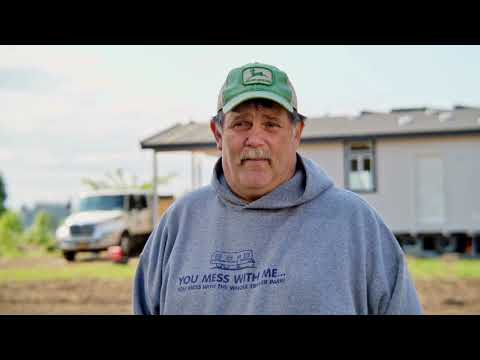
Photo: Downtowngal (CC BY-SA 3.0)
Job description
A typical job might start with reviewing a work order or talking through transit or storm damage with a customer, then removing damaged panels, repairing the frame, and resealing leaks with hand tools. Installers also handle plumbing and gas-line repairs on mobile and modular homes and prep modular units for shipment by sealing open sides with sheeting before they leave the factory. The pace is often fast and deadline-driven, with real exposure to weather, heights, and heavy equipment on any given site.
Pros
- Faster than average projected job growth (5.9% over the next decade)
- Entry with just a high school diploma and on-the-job training, no degree needed
- Varied, hands-on work: framing repair, plumbing, hardware, and finish work in one role
Cons
- Entry-level pay can be quite low, starting around $27k
- Physically demanding outdoor work exposed to weather, heights, and hazardous equipment
- Only about 300 jobs nationwide, so opportunities are geographically limited
A typical day
The house arrives in two halves on trucks at 8am, and the crew's day is to make it a home on its site: the foundation piers checked against the plan, the first section winched and guided into position with hand signals and no wasted motion. The marriage line — where the halves join — is the craft's heart: floors drawn tight, the ridge aligned, the structural connections bolted to spec before anything cosmetic happens. Midday is leveling work with water level and shims, because a quarter-inch error today becomes cracked drywall and sticking doors forever. The afternoon closes the envelope: the roof cap shingled over the seam, siding married invisibly, and utility connections roughed for the licensed trades. Anchoring straps get torqued to the wind-zone requirement and inspected. By week's end a family gets keys to a house that started as highway freight — the trade's quiet magic, done right, in every weather.
Tasks at the job
- Remove damaged exterior panels, repair and replace structural frame members, and seal leaks, using hand tools.
- Confer with customers or read work orders to determine the nature and extent of damage to units.
- Install, repair, and replace units, fixtures, appliances, and other items and systems in mobile and modular homes, prefabricated buildings, or travel trailers, using hand tools or power tools.
- Reset hardware, using chisels, mallets, and screwdrivers.
- Repair leaks in plumbing or gas lines, using caulking compounds and plastic or copper pipe.
- Seal open sides of modular units to prepare them for shipment, using polyethylene sheets, nails, and hammers.
Workplace & working conditions
Work happens primarily outdoors, exposed to whatever the weather is doing, and most of the day is spent on your feet, and you work in close physical proximity to coworkers or the public for much of the shift. Noise levels can be distracting or uncomfortable. The role involves regular exposure to hazardous equipment or conditions and contaminants and working at heights.
The pace is often fast, with real time pressure to meet deadlines, and you're expected to exercise significant independent judgment day to day. Precision and accuracy are essential to the work, and the work is highly structured, following set procedures. You'll regularly deal with frustrated or upset people as part of the job.
Education necessary or common
High school diploma; some on-the-job training or apprenticeship
Licenses & certifications
- State manufactured home installer license (many states require and test for it)
- OSHA 10-Hour Construction
- Forklift/telehandler certification
- HUD installation standards training
Career path
Related fields
Courses to take
- Building Trades/Construction — the multi-skill foundation
- Geometry — leveling, alignment, and square are the job
- Algebra — loads, measurements, and materials
- Shop class — tools and fasteners fluency
- Physics — jacks, levels, and structural loads
Clubs, activities & competitions
- SkillsUSA — construction trades events
- Habitat for Humanity builds
- Summer construction labor
- FFA — many installers work rural markets where ag-mechanical skills overlap
First steps you can take now
- Learn to use a level properly — torpedo, four-foot, and water level — and practice truly leveling something
- Watch a manufactured home set/installation video series start to finish
- Contact manufactured home dealers about set crew openings — crews hire and train at 18
- Take OSHA 10 online