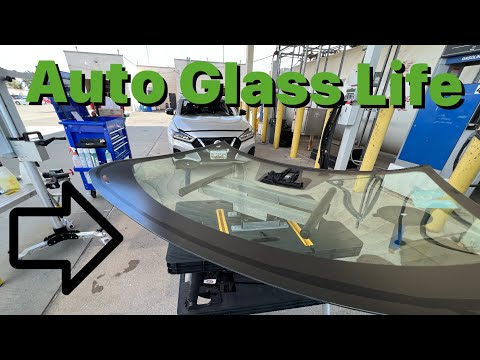
Photo: PhoenixAutoGlass (CC BY-SA 4.0)
Job description
Each job starts with pulling the correct windshield or window for the vehicle's exact make and model and checking it for defects before installation, then removing trim, clips, and interior moldings to access the opening. Installers apply an even bead of urethane adhesive around the frame and have to time the cure carefully, since temperature and humidity affect how long it takes, sometimes requiring the glass itself to be warmed or cooled first. Many installers work out of auto shops or dealerships, but mobile service trucks that travel to the customer are common too, mixing hands-on shop work with driving between appointments.
Pros
- Faster than average projected growth at 3.6%, with 1,400 positions nationwide
- Accessible entry via a high school diploma and on-the-job training, no college required
- Hands-on, physical trade work rather than a desk job, with visible results each job
Cons
- Only about 1,400 positions nationwide, so opportunities may be geographically limited
- Work happens primarily outdoors regardless of weather, from summer heat to winter cold
- Pay tops out under $71k, modest even after gaining experience
A typical day
Three windshields and two rock-chip repairs are on the schedule, and the first is a mobile job: the van rolls to a customer's office park, where the installer cuts out the old glass with a fiber wire tool, preps the pinch weld to bare-metal standards, primes, lays a perfect triangle bead of urethane, and sets the new windshield with suction cups and a helper's timing. The chip repair afterward is almost meditative — resin injected under vacuum until the star break vanishes. The last job of the day includes recalibrating the forward camera behind the glass, because a lane-keeping system aimed one degree wrong is a safety defect. Clean cuts, clean adhesive work, and drive-away times respected: the customer's airbag depends on that bond holding.
Tasks at the job
- Allow all glass parts installed with urethane ample time to cure, taking temperature and humidity into account.
- Obtain windshields or windows for specific automobile makes and models from stock and examine them for defects prior to installation.
- Replace or adjust motorized or manual window-raising mechanisms.
- Apply a bead of urethane around the perimeter of each pinchweld and dress the remaining urethane on the pinchwelds so that it is of uniform level and thickness.
- Remove moldings, clips, windshield wipers, screws, bolts, and inside A-pillar moldings and lower headliners in preparation for installation or repair work.
- Cool or warm glass in the event of temperature extremes.
Workplace & working conditions
Work happens primarily outdoors, exposed to whatever the weather is doing, and most of the day is spent on your feet. Noise levels can be distracting or uncomfortable. The role involves regular exposure to hazardous equipment or conditions, and standard protective equipment (gloves, safety glasses, and similar) is expected.
The pace is often fast, with real time pressure to meet deadlines.
Education necessary or common
High school diploma; some on-the-job training or apprenticeship
Licenses & certifications
- AGSC/AGRSS certification (the auto glass safety standard)
- ADAS calibration training (employer or vendor programs)
Career path
Related fields
Courses to take
- Auto Shop
- Chemistry — adhesives and primers have rules
- Geometry
- Physical Science
Clubs, activities & competitions
- SkillsUSA
- Part-time work at an auto shop, detailer, or parts store
- Hands-on hobby with careful adhesive/finish work (models, repairs)
- Car club
First steps you can take now
- Watch professional windshield replacement videos and learn why urethane cure time is non-negotiable
- Ask a local glass shop about helper positions — most training is on the job
- Practice careful masking, priming, and sealing on any home project to build adhesive discipline
- Learn what ADAS recalibration is; it's the skill making this trade more technical and better paid