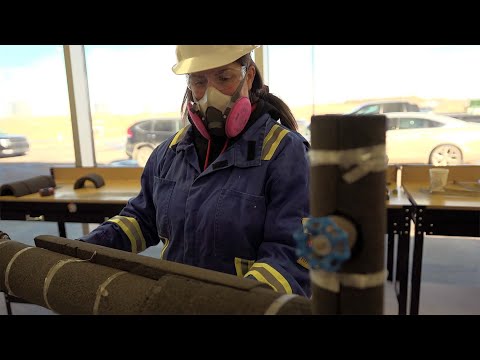
Photo: Saud (CC BY-SA 4.0)
Job description
After reading blueprints and specifications to figure out what thickness and type of insulation a job calls for, mechanical insulation workers measure and cut materials like fiberglass, foam, or cork and apply them to pipes, tanks, and heat exchangers, sometimes prepping the surface first with adhesives or metal pins. Much of the work happens climbing scaffolding or squeezing into tight mechanical spaces alongside pipefitters and other trades on a larger crew. Experienced workers often specialize in industrial or marine insulation, or move into estimating and supervising other crews, and the pace tends to be fast with real deadline pressure and regular exposure to heights and contaminants.
Pros
- High upside earning potential, with top pay reaching just over $100k
- Faster than average projected job growth (4.7%) over the next decade
- Skilled trade work reading blueprints and selecting the right materials for each job
Cons
- A relatively small number of positions nationwide (around 2,300) limits opportunities
- Regular exposure to insulation dust, fibers, and other contaminants, plus work at heights
- Fast-paced work with real time pressure on industrial project deadlines
A typical day
Today's job is a hospital mechanical room, and the morning starts with a measure-up: hundreds of feet of chilled water pipe, each diameter needing its own size of pre-formed insulation. The work is precise handcraft — sectional fiberglass fitted over pipe, joints sealed, and the tricky parts fabricated by hand: elbows, valves, and flanges wrapped in custom-cut pieces the insulator patterns on the spot like a tailor. Midday shifts to ductwork, wrapping and pinning blanket insulation, then jacketing exposed runs in PVC and aluminum with clean, rivet-straight seams — in a mechanical room, the insulator's finish work is the only trade anyone sees. Scaffold moves, material staging, and a foreman's layout for tomorrow close the day. The union path here is strong, and the craft's specialists are never idle.
Tasks at the job
- Measure and cut insulation for covering surfaces, using tape measures, handsaws, knives, and scissors.
- Apply, remove, and repair insulation on industrial equipment, pipes, ductwork, or other mechanical systems such as heat exchangers, tanks, and vessels, to help control noise and maintain temperatures.
- Determine the amounts and types of insulation needed, and methods of installation, based on factors such as location, surface shape, and equipment use.
- Read blueprints and specifications to determine job requirements.
- Prepare surfaces for insulation application by brushing or spreading on adhesives, cement, or asphalt, or by attaching metal pins to surfaces.
- Select appropriate insulation, such as fiberglass, Styrofoam, or cork, based on the heat retaining or excluding characteristics of the material.
Workplace & working conditions
Work happens indoors, though not always in a climate-controlled space, and most of the day is spent on your feet. Noise levels can be distracting or uncomfortable. The role involves regular exposure to contaminants and working at heights, and specialized protective equipment is standard.
The pace is often fast, with real time pressure to meet deadlines, and you're expected to exercise significant independent judgment day to day.
Education necessary or common
High school diploma; some on-the-job training or apprenticeship
Licenses & certifications
- Registered apprenticeship with Insulators International (HFIAW) — the premier path
- OSHA 10-Hour Construction
- Asbestos awareness/abatement certification — valuable for renovation work
- Scaffold user training
Career path
Related fields
Courses to take
- Geometry — pipe layout and pattern development are applied geometry at its purest
- Building Trades/Construction — trade fundamentals
- Algebra — takeoffs, diameters, and material estimates
- Physics — thermal principles behind every spec
- Drafting — reading mechanical plans
Clubs, activities & competitions
- SkillsUSA — trades competitions and exposure
- Habitat for Humanity or community construction volunteering
- Sheet metal, sewing, or pattern-based crafts — the layout skills genuinely transfer
- Summer labor with a mechanical contractor
First steps you can take now
- Look up the Heat and Frost Insulators union (Insulators International) apprenticeship in your region — earn while learning, strong wages
- Practice pattern layout: make a paper elbow cover for a pipe using online templates
- Take OSHA 10 with attention to scaffold safety
- Visit a mechanical contractor and ask what insulators earn at journeyman scale — it surprises people