Photo: Austin Transportation and Public Works (Public domain)
Job description
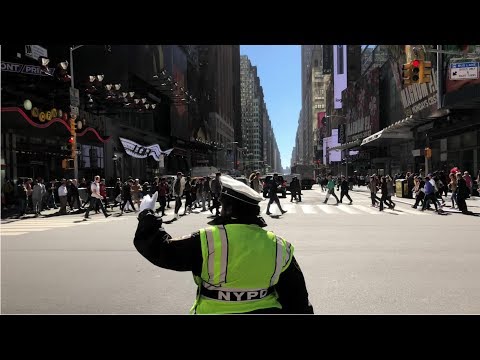
Whether posted at a school crossing, a railroad crossing, or a construction site, the job is about reading traffic closely enough to spot a safe gap for pedestrians and acting on it immediately, sometimes stopping vehicles outright with a raised hand or sign. Guards also note vehicles that ignore signals and report the infractions, and much of the shift is spent outdoors on foot regardless of weather. Because a missed signal can cause real harm, the role calls for constant attention and sound judgment rather than a repetitive routine, and it's typically an entry-level position learned through on-the-job training.
Pros
- Standard, predictable full-time-range hours (30-40/week) with a fixed daily schedule
- Faster than average projected job growth (3.6% over the next decade)
- Low barrier to entry: just a high school diploma and on-the-job training
Cons
- Entirely outdoor work, exposed to whatever weather the day brings
- High-stakes role where a missed signal can have serious consequences
- Pay tops out under $62k even at the high end of the range
A typical day
The corner post starts twenty minutes before the first bell: vest on, sign in hand, watching the traffic pattern build as parents and buses converge on the school zone. Each crossing is a judgment call executed the same way every time — find the gap, step out, sign up, eye contact with every driver before waving the kids through, because assumptions are how accidents happen. The regulars get greeted by name; the driver who rolled through the crosswalk gets a license plate recorded and reported. A construction flagger's version runs all day instead of two shifts — coordinating alternating traffic through a one-lane closure by radio with the flagger at the other end, staying alert through hour six the same as hour one. In both versions, the entire job is vigilance worn lightly.
Tasks at the job
- Communicate traffic and crossing rules and other information to students and adults.
- Record license numbers of vehicles disregarding traffic signals, and report infractions to appropriate authorities.
- Guide or control vehicular or pedestrian traffic at such places as street and railroad crossings and construction sites.
- Monitor traffic flow to locate safe gaps through which pedestrians can cross streets.
- Direct traffic movement or warn of hazards, using signs, flags, lanterns, and hand signals.
- Direct or escort pedestrians across streets, stopping traffic, as necessary.
Workplace & working conditions
Work happens primarily outdoors, exposed to whatever the weather is doing, and most of the day is spent on your feet, and you work in close physical proximity to coworkers or the public for much of the shift. Noise levels can be distracting or uncomfortable. The role involves regular exposure to contaminants, and standard protective equipment (gloves, safety glasses, and similar) is expected.
You're expected to exercise significant independent judgment day to day. Mistakes can have serious consequences, so accuracy matters a lot.
Education necessary or common
High school diploma; some on-the-job training or apprenticeship
Licenses & certifications
- State flagger certification (ATSSA or state DOT)
- First Aid/CPR
Related fields
Courses to take
- Health — safety awareness and first aid basics
- PE — the job is outdoors, standing, in all weather
- Driver's Education — understanding driver behavior from both sides
- English — incident reporting
Clubs, activities & competitions
- Safety patrol programs — some districts still run student versions
- Volunteer at school events directing parking or foot traffic
- Scouting — safety merit badges and service orientation
First steps you can take now
- Ask your school district how crossing guards are hired — many hire adults of all ages part-time
- Get flagger certified — it's a short, inexpensive course and construction crews always need certified flaggers
- Learn the standard hand signals and traffic control basics
- Practice situational awareness: watch an intersection for ten minutes and count the near-misses