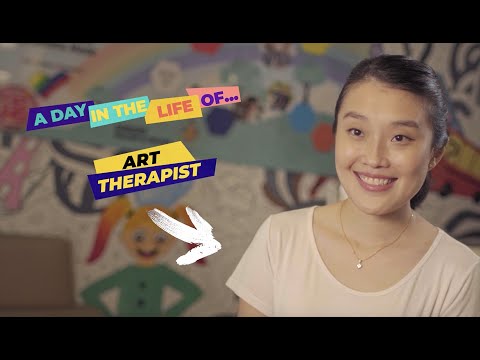
Photo: Ganna Zavolodko (CC BY-SA 4.0)
Job description
A session is built around an activity, drawing, painting, or sculpting, chosen specifically to work toward a client's therapeutic goal, with the therapist guiding the process while watching closely for how the client expresses themselves nonverbally. Therapists document each client's reactions and progress in detail and regularly coordinate with the rest of a care team, counselors or psychiatrists, for instance, to keep everyone aligned on the treatment plan. The approach is especially useful for clients who struggle to process trauma or emotion through conventional talk therapy alone. Settings range from hospitals and schools to private practice, and the credential path requires a master's degree in art therapy or counseling with an art therapy specialization, plus board certification.
Pros
- Much faster than average projected job growth (11.5%)
- High upside earning potential up to $153k for a niche specialty
- Creative, low-tech approach to therapy that can reach clients traditional talk therapy doesn't
Cons
- Entry-level pay starts well below the field's high end ($46,540 low end)
- Requires a master's degree plus board certification before practicing independently
- Regularly works with clients experiencing real emotional distress, an emotionally demanding role
A typical day
The morning group at the children's hospital gathers five patients around a table of markers and clay; the therapist's prompt is gentle — draw a safe place — and the clinical work happens in what emerges and the conversation it opens. Between sessions, notes connect each child's imagery to treatment goals in careful clinical language. The afternoon holds individual sessions: a teenager processing grief who says little but paints in blacks and reds that speak first, and a veteran at the outpatient clinic whose collage work is loosening a story talk therapy couldn't reach. Supervision hour with a senior clinician examines a tough case. Materials get restocked; the room resets to welcoming.
Tasks at the job
- Observe and document client reactions, progress, or other outcomes related to art therapy.
- Design art therapy sessions or programs to meet client's goals or objectives.
- Conduct art therapy sessions, providing guided self-expression experiences to help clients recover from, or cope with, cognitive, emotional, or physical impairments.
- Confer with other professionals on client's treatment team to develop, coordinate, or integrate treatment plans.
- Assess client needs or disorders, using drawing, painting, sculpting, or other artistic processes.
- Talk with clients during art or other therapy sessions to build rapport, acknowledge their progress, or reflect upon their reactions to the artistic process.
Workplace & working conditions
Work happens indoors in a climate-controlled setting, and most of the day is spent sitting at a desk, and you work in close physical proximity to coworkers or the public for much of the shift.
There's a regular, moderate amount of time pressure, and you're expected to exercise significant independent judgment day to day. The work is highly structured, following set procedures. You'll regularly deal with frustrated or upset people as part of the job.
Education necessary or common
Master's degree in art therapy or counseling with an art therapy specialization, plus board certification
Common college majors
Licenses & certifications
- ATR (Registered Art Therapist), then ATR-BC (board certified)
- State counseling licensure (varies)
Career path
Related fields
Courses to take
- AP Psychology — the clinical half of the hybrid
- Studio Art — every level; graduate programs require a real portfolio
- AP Biology — neuroscience and development context
- Anatomy & Physiology if offered
- AP English Language — clinical documentation
Clubs, activities & competitions
- Art club plus a mental-health awareness club — this career is the overlap
- Volunteer with children's programs, hospitals, or senior centers doing art activities
- Peer counseling program
- Scholastic Art & Writing Awards
First steps you can take now
- Volunteer to run a simple art activity at a senior center, shelter, or children's program and observe what it opens up
- Keep your own reflective art journal for a month
- Interview an art therapist through the American Art Therapy Association's resources
- Build studio hours: graduate programs typically require 18+ credits of studio art, so start the portfolio now