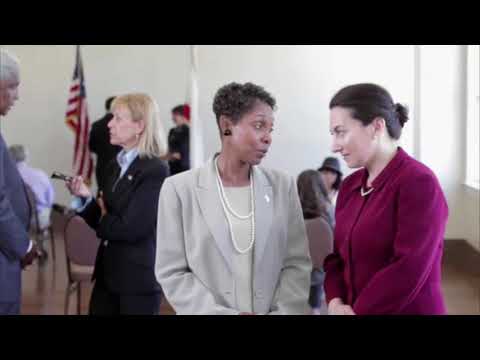
Photo: Marvin Nauman (Public domain)
Job description
Managers set administrative procedures to meet goals set by a board or senior leadership, direct social workers, counselors, or volunteers, and help shape organizational policy on things like who's eligible for a program and what benefits it provides. Day-to-day work also includes handling budgets, personnel records, and reports, plus sometimes stepping in directly on a case, like a child advocacy referral or a client complaint. The role requires close coordination with other agencies to avoid duplicating services in the community, and regularly involves dealing with frustrated or upset people.
Pros
- Faster than average growth (6.4%) with a sizable demand pool (18,600 jobs)
- Direct, visible impact shaping programs that serve people in the community
- Bachelor's degree entry point into a leadership role, not just frontline casework
Cons
- Above-average hours running programs dependent on tight budgets and public funding
- Regularly deals with frustrated clients, staff, or funders inside a rigid, structured process
- Pay ceiling ($132k) trails many other bachelor's-level management roles
A typical day
The morning starts with the numbers behind the mission: the manager reviews last quarter's program outcomes — how many families housed, how many kids completed tutoring — because the grant report due Friday must prove impact, not just effort. A 10am staff meeting checks in on caseworkers carrying heavy loads, part supervision, part pastoral care, since burnout is this field's occupational hazard. Midday brings a funder meeting where the manager translates human stories into the metrics foundations require, then a community partners call coordinating a winter shelter plan across three agencies. The afternoon holds a budget revision (a grant came in smaller than hoped, and services must not), a hiring interview, and a board update drafted. The job is keeping compassion solvent.
Tasks at the job
- Establish and oversee administrative procedures to meet objectives set by boards of directors or senior management.
- Direct activities of professional and technical staff members and volunteers.
- Participate in the determination of organizational policies regarding such issues as participant eligibility, program requirements, and program benefits.
- Prepare and maintain records and reports, such as budgets, personnel records, or training manuals.
- Provide direct service and support to individuals or clients, such as handling a referral for child advocacy issues, conducting a needs evaluation, or resolving complaints.
- Establish and maintain relationships with other agencies and organizations in community to meet community needs and to ensure that services are not duplicated.
Workplace & working conditions
Work happens indoors in a climate-controlled setting, and most of the day is spent sitting at a desk.
There's a regular, moderate amount of time pressure, and you're expected to exercise significant independent judgment day to day. The work is highly structured, following set procedures. You'll regularly deal with frustrated or upset people as part of the job, and almost all of the work is done as part of a team.
Education necessary or common
Bachelor's degree
Common college majors
Licenses & certifications
- MSW (common for advancement)
- CNP (Certified Nonprofit Professional)
- Grant writing certificates
Career path
Related fields
Courses to take
- Psychology/AP Psychology — the human systems being served
- Business/Accounting — nonprofits run on budgets and grants
- AP English Language — grant writing is persuasion with citations
- AP Statistics — outcomes measurement
- Sociology — community context
Clubs, activities & competitions
- Key Club or National Honor Society — service leadership roles
- Student government — program and budget experience
- Volunteer consistently with one organization and earn responsibility there
- Organize a real drive or fundraiser end to end
First steps you can take now
- Volunteer weekly with a local nonprofit and ask to see how programs get funded
- Organize one service project completely: goal, plan, volunteers, results reported
- Interview an executive director about the path into nonprofit management
- Take a free grant-writing intro course online