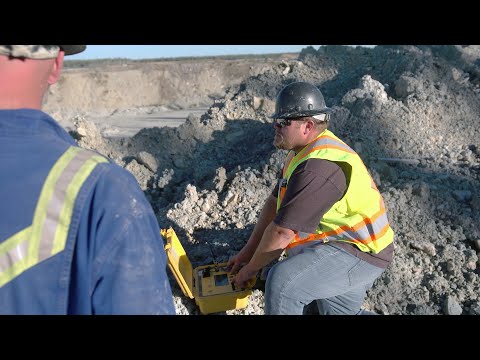
Photo: W.carter (CC BY 4.0)
Job description
Before setting a single charge, a blaster examines the blast area to figure out the amount and type of explosive needed and confirm safety laws are being followed, then assembles and positions the explosives and blasting caps in holes at specified depths. Charges get wired to primers and packed with clay, drill chips, or sand to control the blast, and afterward the blaster verifies detonation by watching control panels or listening for the blast itself. Explosives also have to be transported, stored, and inventoried according to strict safety procedures, sometimes requiring the blaster to drive materials directly to the site. Because mistakes here can have serious consequences, accuracy and following exact procedure matter more than speed, and the work happens outdoors in all conditions with standard protective gear required.
Pros
- Pay tops out near $99k, strong for a role requiring only a high school diploma
- Specialized technical skill set (blast calculation, wiring, safety procedures)
- Varied fieldwork across site assessment, equipment handling, and transport
Cons
- Above-average hours, typically more than a standard 40-hour work week
- High-stakes work where mistakes with explosives can have serious consequences
- Very small nationwide job count (about 500 positions) with a projected 0.9% decline
A typical day
The blast is scheduled for 1 p.m., so the morning is preparation: examining the rock face, checking drill-hole depths against the blast plan, and calculating the charge weight each hole gets. Loading is methodical — explosives down the hole, stemming tamped on top, wiring checked and rechecked against the diagram, everything logged. At midday the crew clears and guards the zone, sirens sound, and the blaster fires from a safe position, feeling the ground thump before the dust rises. The afternoon is all verification: walking the muck pile for misfires, documenting the shot, and securing the magazine inventory to the pound.
Tasks at the job
- Examine blast areas to determine amounts and kinds of explosive charges needed and to ensure that safety laws are observed.
- Connect electrical wire to primers, and cover charges or fill blast holes with clay, drill chips, sand, or other material.
- Assemble and position equipment, explosives, and blasting caps in holes at specified depths, or load perforating guns or torpedoes with explosives.
- Verify detonation of charges by observing control panels, or by listening for the sounds of blasts.
- Move and store inventories of explosives, loaded perforating guns, and other materials, according to established safety procedures.
- Drive trucks to transport explosives and blasting equipment to blasting sites.
Workplace & working conditions
Work happens primarily outdoors, exposed to whatever the weather is doing, and most of the day is spent on your feet. Noise levels can be distracting or uncomfortable. The role involves regular exposure to hazardous equipment or conditions and contaminants and working at heights, and standard protective equipment (gloves, safety glasses, and similar) is expected.
The pace is often fast, with real time pressure to meet deadlines. Mistakes can have serious consequences, so accuracy matters a lot. You'll regularly deal with frustrated or upset people as part of the job.
Education necessary or common
High school diploma; some on-the-job training or apprenticeship
Licenses & certifications
- State blaster license/certification (required)
- ATF employee possessor clearance
- MSHA training for mine sites
- OSHA 30 for construction demolition
Career path
Related fields
Courses to take
- Chemistry — explosives are energetic chemistry and respect starts with understanding
- Physics — shockwaves, timing, and rock mechanics
- Geometry and Algebra II — burden, spacing, and charge calculations
- Earth Science — rock type dictates the blast design
- Shop or drafting classes — reading plans precisely
Clubs, activities & competitions
- SkillsUSA — construction and heavy-industry pathways
- FFA or any work around heavy equipment and strict safety culture
- JROTC — discipline and procedures transfer well
- Science fair with a (safe) chemistry or physics project
First steps you can take now
- Understand the legal path: ATF licensing, state blaster certification, and a clean record are mandatory
- Look up MSHA and OSHA training requirements for mine and construction sites
- Talk to a quarry or demolition contractor about laborer jobs that feed into blasting crews
- Study the free ISEE (International Society of Explosives Engineers) intro materials