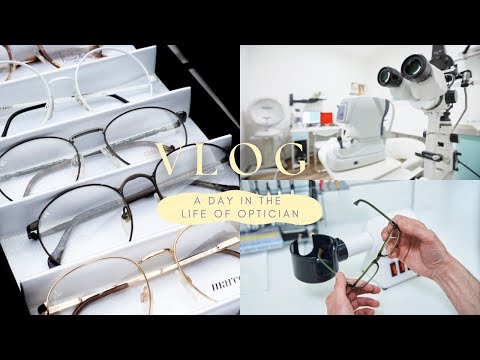
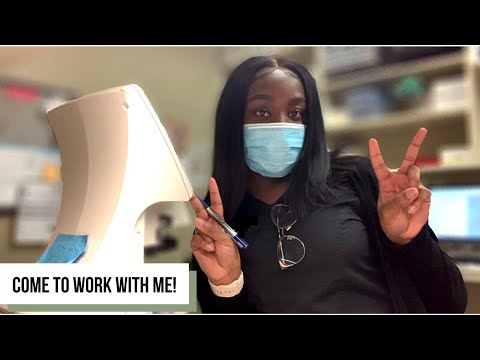
Photo: Fung Kimmia (CC BY-SA 3.0)
Job description
The job starts with precise measurements, bridge and eye size, pupillary distance, temple length, that get translated into a work order for the optical lab to grind and mount lenses. Opticians help clients choose frames that suit their face and style, then heat, shape, or bend those frames by hand to get the final fit right, verifying that finished lenses match the prescription exactly. It's detail-heavy, client-facing work where accuracy and patience with frustrated customers both matter.
Pros
- Accessible entry point via vocational training or an associate's degree rather than years of schooling
- Steady demand with 6,800 projected job openings and growth above the average
- Hands-on, client-facing work fitting a tangible product people rely on every day
Cons
- Precision and accuracy are essential, since even small measurement errors affect a client's vision
- Regularly deals with frustrated or upset customers over fit, cost, or prescription issues
- Fast-paced days with constant deadline pressure to turn around orders and fittings
A typical day
The first patient at 9am brings a new progressive prescription and no idea what frames suit her — the optician's craft starts with the face: measuring pupillary distance and seg heights, reading lifestyle (screens all day? night driving?), and steering the choice toward frames that fit the prescription's physics, not just the mirror. Dispensing fills mid-morning: finished glasses adjusted with warmed temples and precise bends until they sit weightless, plus a walk-in whose bent frames get resurrected with pliers and patience, free of charge and good for a decade of loyalty. The afternoon includes a first-time contact lens teaching session — insertion, removal, and the hygiene lecture delivered kindly but seriously — insurance billing, lab-order checks on incoming jobs, and a tricky troubleshoot: new glasses causing dizziness, traced to a base-curve change the optician catches and corrects.
Tasks at the job
- Measure clients' bridge and eye size, temple length, vertex distance, pupillary distance, and optical centers of eyes, using measuring devices.
- Verify that finished lenses are ground to specifications.
- Recommend specific lenses, lens coatings, and frames to suit client needs.
- Assist clients in selecting frames according to style and color, and ensure that frames are coordinated with facial and eye measurements and optical prescriptions.
- Maintain records of customer prescriptions, work orders, and payments.
- Heat, shape, or bend plastic or metal frames to adjust eyeglasses to fit clients, using pliers and hands.
Workplace & working conditions
Work happens indoors in a climate-controlled setting, and you work in close physical proximity to coworkers or the public for much of the shift.
The pace is often fast, with real time pressure to meet deadlines, and you're expected to exercise significant independent judgment day to day. Precision and accuracy are essential to the work. You'll regularly deal with frustrated or upset people as part of the job.
Education necessary or common
Vocational training, apprenticeship, or associate's degree
Common college majors
Licenses & certifications
- ABO certification (spectacles)
- NCLE certification (contact lenses)
- State optician license (in licensing states)
Career path
Related fields
Courses to take
- Physics — lens optics is the daily science
- Anatomy and Physiology — the eye and face you're fitting
- Algebra II — prescription conversions and optical math
- Business or Marketing — dispensing is retail healthcare; both halves matter
- Health Science CTE courses — patient interaction fundamentals
Clubs, activities & competitions
- HOSA-Future Health Professionals
- Part-time retail job — customer service is half this career
- SkillsUSA — customer service and health-related events
- Volunteer at community vision screenings
First steps you can take now
- Ask an optical shop about part-time frame-styling or reception work — many opticians started exactly there
- Learn to read an eyeglass prescription this week; free guides abound
- Check your state's requirements — some license opticians via exam or apprenticeship, others don't
- Study the ABO exam outline to see the body of knowledge