Photo: Gilo1969 (CC BY 2.0)
Job description
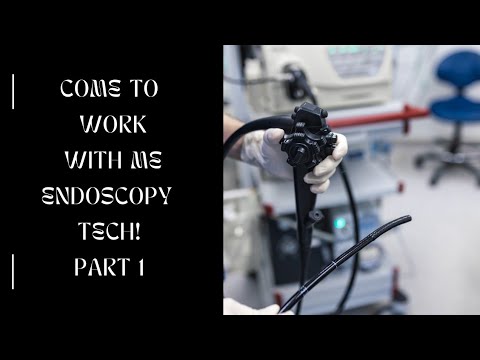
Before a procedure, technicians clean, disinfect, and calibrate scopes and other instruments to manufacturer and facility standards, then prepare the room and place monitoring devices like blood pressure cuffs and pulse oximeter sensors on the patient. During the procedure itself, they assist the physician or nurse directly, and afterward run safety checks to confirm equipment is working properly for the next use. The job is done mostly on your feet, close to patients and coworkers, with specialized protective equipment standard given the exposure to bodily materials.
Pros
- Only a high school diploma and on-the-job training required for healthcare pay up to $71k
- Faster than average projected job growth (3.5%) as endoscopic procedures become more common
- Hands-on clinical role working directly alongside physicians and nurses in procedures
Cons
- Regular exposure to hazardous equipment and contaminants requires strict adherence to sterile technique
- On your feet for most of the shift in close physical contact with patients and staff
- Precision matters throughout, since equipment calibration and specimen handling affect procedure safety
A typical day
The day opens in the reprocessing room, running yesterday's scopes through leak tests and high-level disinfection — a strict, checklist-driven ritual because a dirty scope can transmit infection. Once the procedure schedule starts, the tech sets up each room: scope on the tower, suction ready, biopsy forceps laid out in order. During colonoscopies and upper endoscopies the tech anticipates the physician's next request, passing instruments and labeling specimen jars the moment tissue comes out. Between cases everything is turned over fast but by the book, and the last hour goes to restocking and equipment logs.
Tasks at the job
- Clean, disinfect, or calibrate scopes or other endoscopic instruments according to manufacturer recommendations and facility standards.
- Collect specimens from patients, using standard medical procedures.
- Perform safety checks to verify proper equipment functioning.
- Assist physicians or registered nurses in the conduct of endoscopic procedures.
- Place devices, such as blood pressure cuffs, pulse oximeter sensors, nasal cannulas, surgical cautery pads, and cardiac monitoring electrodes, on patients to monitor vital signs.
- Prepare suites or rooms according to endoscopic procedure requirements.
Workplace & working conditions
Work happens indoors in a climate-controlled setting, and most of the day is spent on your feet, and you work in close physical proximity to coworkers or the public for much of the shift. The role involves regular exposure to hazardous equipment or conditions and contaminants, and specialized protective equipment is standard.
There's a regular, moderate amount of time pressure. Precision and accuracy are essential to the work. Almost all of the work is done as part of a team.
Education necessary or common
High school diploma; some on-the-job training or apprenticeship
Licenses & certifications
- BLS/CPR
- Certified Flexible Endoscope Reprocessor (CFER)
- Certified Registered Central Service Technician (CRCST) as a stepping stone
Career path
Related fields
Courses to take
- Anatomy & Physiology — you will know the GI tract like a map
- Biology — infection control rests on microbiology basics
- Chemistry — disinfectants and reprocessing chemicals demand respect
- Health Science pathway courses — clinical vocabulary and sterile technique
- Intro to Computer Applications — procedure documentation is electronic
Clubs, activities & competitions
- HOSA (Future Health Professionals)
- Hospital volunteering — ask specifically about the endoscopy or surgical services floor
- Science club with a dissection or physiology focus
- Part-time job requiring precision and cleanliness (lab aide, food service with safety protocols)
First steps you can take now
- Apply for a hospital volunteer position and ask to see the procedural areas
- Get CPR/BLS certified
- Look up sterile processing technician programs at your community college — a common entry door
- Ask a school counselor to connect you with a local hospital's health careers program