Photo: Dominicus Johannes Bergsma (CC BY-SA 4.0)
Job description
Operators measure and mark workpieces before cutting, then mount and adjust saw blades using wrenches, handwheels, or foot pedals depending on the machine. While the saw runs, they watch for jams, keep an eye on speed and tension, and check finished pieces against spec with rulers and calipers. Sharpening or swapping worn blades is routine maintenance, and some operators run computer numerically controlled (CNC) equipment as they gain experience, with lead sawyer roles open to those who progress furthest.
Pros
- Nearly flat projected job growth (-0.6%), more stable than many production-floor roles
- No degree needed, just a high school diploma and on-the-job training
- Room to grow into CNC equipment operation or a lead sawyer role
Cons
- Physically demanding work on your feet with regular exposure to noise and hazardous blades
- Fast-paced, deadline-driven work where precision is essential
- Entry-level pay starts modestly around $31k
A typical day
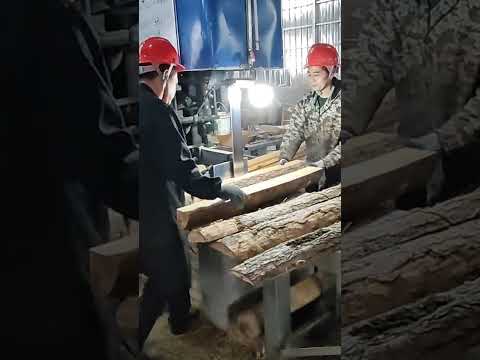
The mill floor starts loud and stays loud: the operator's first job is setup — mounting the right blade for the day's run, setting fence and stops to the cut list, and running test pieces measured with calipers before committing good lumber. The rhythm then takes over: feed, cut, stack, with eyes on the grain because a knot approached wrong can kick, and ears tuned to the blade because pitch change means dulling or trouble. Mid-shift brings a changeover to a different dimension, blade swaps, and clearing sawdust from the works. Quality checks pull boards against spec through the day. The operator ends the shift sharpening or staging blades and sweeping — a clean saw station is a safe one.
Tasks at the job
- Inspect and measure workpieces to mark for cuts and to verify the accuracy of cuts, using rulers, squares, or caliper rules.
- Adjust saw blades, using wrenches and rulers, or by turning handwheels or pressing pedals, levers, or panel buttons.
- Mount and bolt sawing blades or attachments to machine shafts.
- Monitor sawing machines, adjusting speed and tension and clearing jams to ensure proper operation.
- Sharpen blades, or replace defective or worn blades or bands, using hand tools.
- Clear machine jams, using hand tools.
Workplace & working conditions
Work happens indoors, though not always in a climate-controlled space, and most of the day is spent on your feet. Noise levels can be distracting or uncomfortable. The role involves regular exposure to hazardous equipment or conditions and contaminants, and standard protective equipment (gloves, safety glasses, and similar) is expected.
The pace is often fast, with real time pressure to meet deadlines, and you're expected to exercise significant independent judgment day to day. Precision and accuracy are essential to the work.
Education necessary or common
High school diploma; some on-the-job training or apprenticeship
Licenses & certifications
- OSHA 10 General Industry
Career path
Related fields
Courses to take
- Shop/Woodworking — the direct foundation
- Geometry — dimensions, angles, and material yield
- Algebra — cut-list math and measurements
- Physics — blade speed, feed rate, and kickback are physics lessons with stakes
Clubs, activities & competitions
- SkillsUSA — cabinetmaking and woodworking competitions
- Woodworking or maker club
- A lumberyard or construction part-time job
First steps you can take now
- Take every woodshop class your school offers and master the table saw's safety rules
- Build one project this month with dimensioned cuts from a plan
- Get OSHA 10 General Industry online
- Ask a local sawmill, cabinet shop, or lumber mill about entry helper positions